
Hersteller in der Lebensmittel- und Getränkeindustrie (F&B) arbeiten in einem der anspruchsvollsten industriellen Umgebungen: Produktionslinien laufen kontinuierlich oder nahezu kontinuierlich, und strenge Hygienestandards sowie enge Margen lassen kaum Raum für Ineffizienzen.
In diesem Kontext ist ungeplante Stillstandszeit nie nur ein Wartungsthema. Sie wirkt sich direkt auf Produktqualität, Energieverbrauch, Rentabilität und die Fähigkeit aus, die Einhaltung strenger regulatorischer und hygienischer Anforderungen sicherzustellen.
Predictive Maintenance (PdM) ist heute ein entscheidender Hebel für Lebensmittel- und Getränkeproduzenten, um diese Risiken besser zu kontrollieren und transparenter zu steuern. Durch die kontinuierliche oder regelmäßige Überwachung des Maschinenzustands und die Erkennung früher Anzeichen von Verschleiß ermöglicht PdM den Instandhaltungsteams, Ausfälle vorherzusehen, Maßnahmen rund um Reinigungszyklen oder Produktwechsel zu planen und die Produktionskontinuität sicherzustellen, ohne die Compliance zu gefährden.
In diesem Artikel erläutern wir was Predictive Maintenance in der Lebensmittel- und Getränkeindustrie konkret bedeutet und warum ihr Einfluss in diesem Sektor so groß ist. Sie erfahren, wie unterschiedliche Produktionsumgebungen spezifische Herausforderungen für die Instandhaltung mit sich bringen, welche Zustandsüberwachungstechnologien sich am besten für F&B-Anlagen eignen und wie PdM überproportionale Vorteile in Bezug auf Verfügbarkeit, Qualität und operative Effizienz liefert. Außerdem zeigen wir, wie IIoT-Sensoren und eine zentrale PdM-Plattform skalierbare Implementierungen ermöglichen und wie Hersteller eine Predictive-Maintenance-Strategie aufbauen können, die mit ihrem Werk wächst.
Inhaltsverzeichnis
Was ist Predictive Maintenance in der Lebensmittel- und Getränkeindustrie?
Predictive Maintenance (PdM) in der Lebensmittel- und Getränkeindustrie bedeutet nicht, einfach mehr Technologie um der Innovation willen einzusetzen. Es geht darum, Produktionskontinuität, Produktqualität und Margen zu schützen in einer Branche, in der selbst kleine Unterbrechungen große Auswirkungen haben können.
Im Kern ist PdM eine datengetriebene Instandhaltungsstrategie, die den tatsächlichen Zustand von Maschinen überwacht, indem sie Zustandsüberwachungsdaten mit fortschrittlicher Analytik (z. B. künstlicher Intelligenz) kombiniert, um Anomalien und Verschleißtrends zu erkennen, sodass Teams Ausfälle antizipieren können, bevor sie auftreten.
Anstatt erst auf einen Ausfall zu reagieren oder Wartungsmaßnahmen ausschließlich nach festen Zeitplänen durchzuführen, nutzt Predictive Maintenance Zustandsüberwachungstechniken (Schwingungsanalyse, Ultraschallanalyse, Infrarot-Thermografie, Ölanalyse, Motion Amplification und Motorstromanalyse), um frühe Anzeichen von Verschleiß zu erkennen, während die Maschinen weiterlaufen.
Diese Unterscheidung ist besonders wichtig in der Lebensmittel- und Getränkeindustrie (F&B). Reaktive Instandhaltung ist schlicht zu kostspielig: Ein ausgefallener Motor auf einer Produktionslinie stoppt nicht nur eine Maschine, sondern unterbricht einen gesamten Prozessfluss von Vorbereitung, Verpackung, Etikettierung und Versand. Vorbeugende Wartung bietet zwar planbare Eingriffe während begrenzter Produktionsfenster, setzt Anlagen jedoch weiterhin ungeplanten Ausfällen zwischen den geplanten Stopps aus.
Predictive Maintenance verändert diese Gleichung. Durch das frühzeitige Erkennen bestimmter Anomalien, abhängig von Maschine, Fehlerart und Überwachungsansatz, kann PdM die notwendige Vorlaufzeit liefern, um Maßnahmen rund um Reinigungszyklen, Produktwechsel oder geplante Stillstände zu planen, anstatt im Notfallmodus zu reagieren.
Dieser Ansatz passt besonders gut zu den Realitäten der Lebensmittel- und Getränkeindustrie, einschließlich regulatorischer Anforderungen, Betriebsbedingungen und Kostentreibern wie:
- Strenge Hygieneanforderungen
- Kontinuierliche oder nahezu kontinuierliche Produktion
- Kühlketten
- Reinigungsumgebungen
- Hohe Energieintensität
PdM ermöglicht Zustandsüberwachung in Umgebungen mit strengen Qualitätsanforderungen, unterstützt eine unterbrechungsfreie Produktion und trägt dazu bei, betriebliche Risiken im Zusammenhang mit alternden oder stark belasteten Maschinen zu reduzieren.
Ob bei bestehenden Anlagen oder modernen Hochgeschwindigkeitslinien eingesetzt, hilft Predictive Maintenance Herstellern in der Lebensmittel- und Getränkeindustrie, ein höheres Maß an Kontrolle zurückzugewinnen. Kontrolle darüber, wann Instandhaltung erfolgt, wie Produktion geschützt wird und wie Risiken für Qualität, Sicherheit und Rentabilität reduziert werden, bevor sie eskalieren.s F&B manufacturers regain a greater level of control. Control over when maintenance happens, how production is protected, and how risks to quality, safety, and profitability are reduced before they escalate.
Die Vielfalt der Produktionsumgebungen in der Lebensmittel- und Getränkeindustrie
Die Lebensmittel- und Getränkeproduktion ist keine einheitliche Industrie. Hinter den gemeinsamen Anforderungen an Hygiene, Verfügbarkeit und Kosten verbirgt sich eine große Vielfalt an Produktionsumgebungen, die jeweils eigene betriebliche Realitäten und Instandhaltungsherausforderungen mit sich bringen.
Von Hochgeschwindigkeits-Abfüllanlagen für Getränke bis hin zu Tiefkühlproduktionsstätten in kalten Umgebungen gilt: Predictive Maintenance muss sich an sehr unterschiedliche Bedingungen anpassen. Das Verständnis dieser Umgebungen ist entscheidend, um festzulegen, welche Maschinen überwacht werden sollen, welche Fehlerarten antizipiert werden müssen und welche Anforderungen an Zustandsüberwachungstechniken bestehen.
Grundsätzlich lassen sich Produktionsumgebungen in der Lebensmittel- und Getränkeindustrie in vier Hauptkategorien einteilen:
- Getränkeproduktion
- Verarbeitung frischer und gekühlter Lebensmittel
- Tiefkühlproduktion
- Herstellung trockener und haltbarer Lebensmittel
Getränkeproduktion
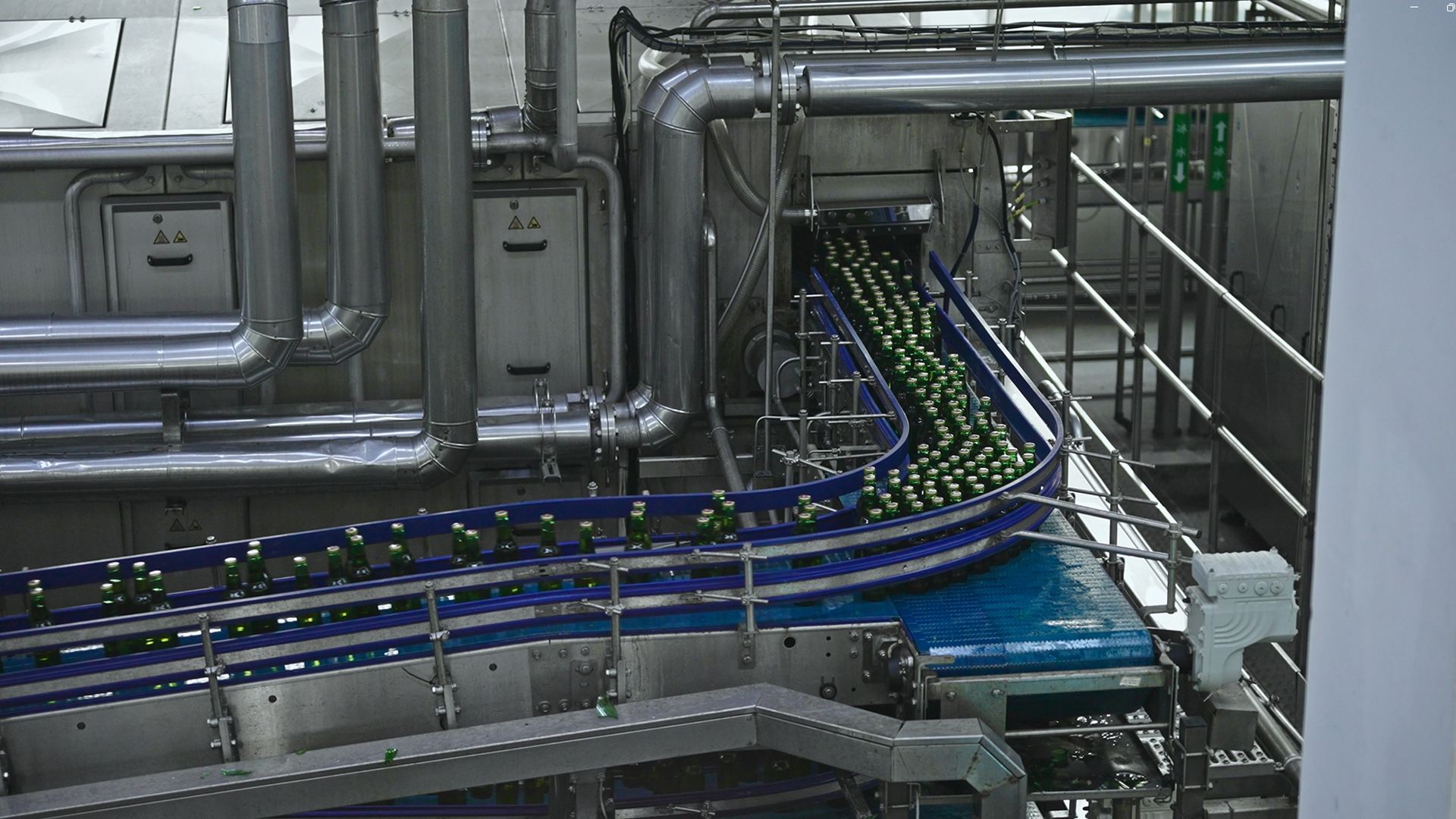
Produktionsumgebungen in der Getränkeindustrie sind geprägt von Geschwindigkeit, Synchronisation und Volumen. Hochleistungsanlagen laufen kontinuierlich, oft mit Tausenden von Einheiten pro Stunde, wobei selbst kleine mechanische Abweichungen weitreichende Störungen verursachen können.
Dazu gehören Abfüll- und Konservierungslinien, Brauereien, Anlagen für Softdrinks und Wasser sowie die Produktion von Milchgetränken.
Die wichtigsten Instandhaltungsanforderungen in diesen Umgebungen sind:
- Hohe Konzentration schnell rotierender Maschinen, wie Motoren, Pumpen, Gebläse und Getriebe
- Kritische Anlagen, darunter Füller, Verschließer, Etikettierer, Förderanlagen und Verpackungsmaschinen, die eng voneinander abhängig sind
- Häufige CIP-Reinigungszyklen (Cleaning-in-Place) und SIP-Sterilisationszyklen (Sterilize-in-Place), die Maschinen thermischen Schocks, Feuchtigkeit und aggressiven Chemikalien aussetzen
- Extrem hohe OEE-, Durchsatz- und Qualitätsanforderungen, mit minimaler Toleranz für ungeplante Stillstände
In diesem Kontext sind Ausfälle selten lokal begrenzt. Ein Lagerdefekt oder eine Fehlstellung an einem Förderband kann sich schnell auf nachgelagerte Prozesse auswirken und die Füllgenauigkeit, die Verschlussqualität, die Etikettierung und letztlich die Versandplanung beeinträchtigen. Da Wartungsfenster begrenzt und oft mit Reinigungszyklen abgestimmt sind, ist die frühzeitige Erkennung von Fehlern entscheidend, um Notfallmaßnahmen zu vermeiden.
Verarbeitung frischer und gekühlter Lebensmittel
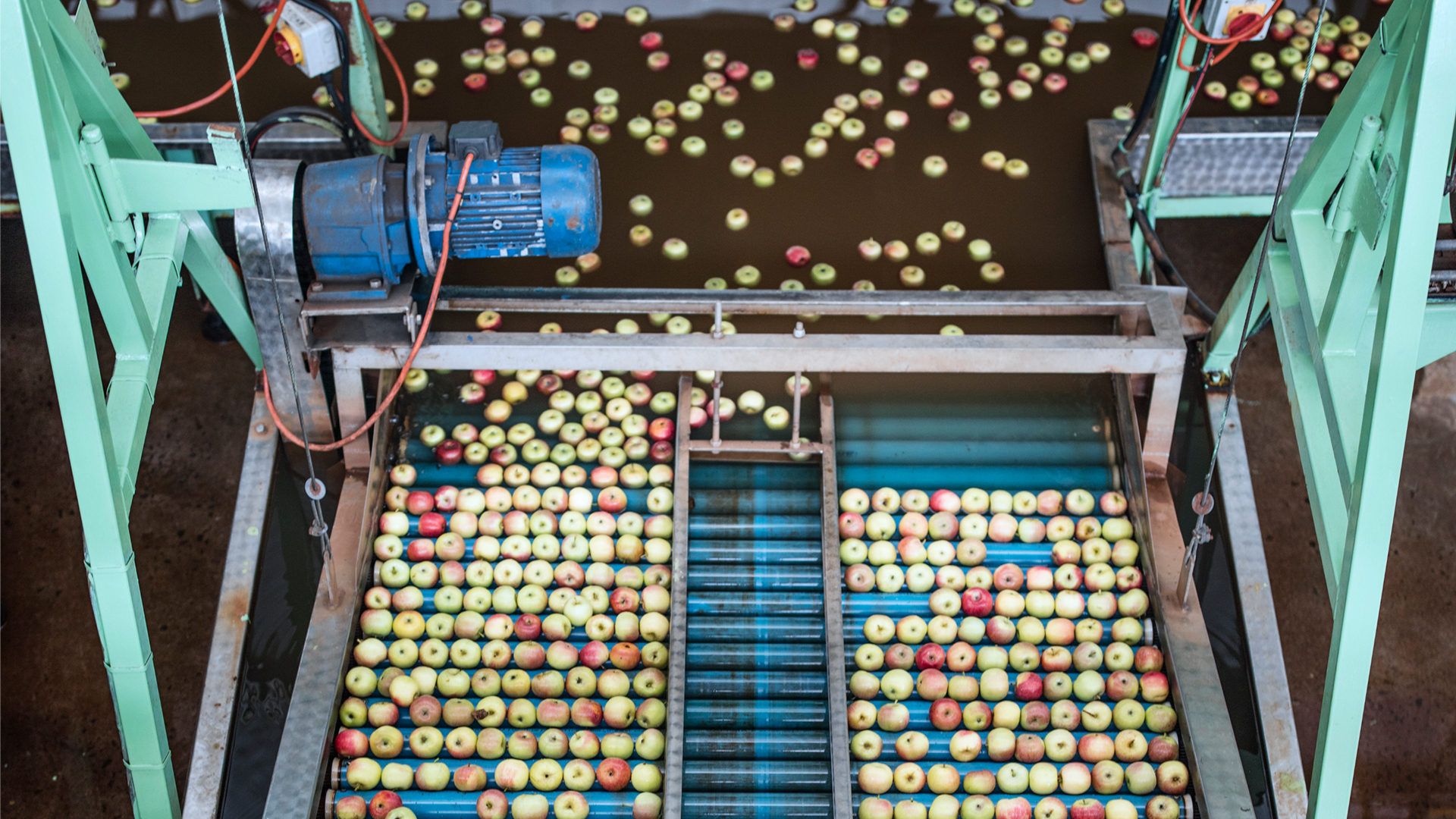
Verarbeitungsumgebungen für frische und gekühlte Lebensmittel sind geprägt von Temperaturkontrolle, Hygiene und hoher Zeitkritikalität. Die Produktion umfasst häufig verderbliche Rohstoffe und kurze Haltbarkeiten, wobei die Zuverlässigkeit der Maschinen direkt die Produktqualität und die Fähigkeit beeinflusst, Verderb zu vermeiden.
Diese Kategorie umfasst Milchprodukte, frisches Fleisch, Geflügel und Fisch, frisch geschnittenes Obst und Gemüse sowie verzehrfertige gekühlte Mahlzeiten.
Die wichtigsten Instandhaltungsanforderungen in diesen Umgebungen sind:
- Umfangreiche Kühlkettenanlagen, einschließlich Kühlaggregate, Chiller und Förderanlagen, die nahe an ihren thermischen Grenzen betrieben werden
- Häufige Wasch- und aggressive Reinigungsprozesse, die Korrosion und das Eindringen von Feuchtigkeit beschleunigen
- Sehr kurze Wartungsfenster, oft begrenzt auf kurze Produktionspausen oder Reinigungszyklen
- Hygienegetriebene Designanforderungen, die die Installation von Sensoren und den physischen Zugang zu Anlagen einschränken
Unter diesen Bedingungen können sich Ausfälle schnell verschärfen. Ein Ausfall einer Kühlanlage, Lagerschäden oder Dichtungsprobleme können nicht nur die Produktion stoppen, sondern auch die Produktqualität beeinträchtigen oder zur Entsorgung ganzer Chargen führen. Da Eingriffe sorgfältig mit Hygiene- und Qualitätsprozessen abgestimmt werden müssen, sind eine frühzeitige Fehlererkennung und nicht-invasive Überwachung entscheidend, um reaktive Wartung und ungeplante Produktverluste zu vermeiden.
Tiefkühlproduktion
Frozen food production environments are defined by extreme operating conditions, energy intensity, and continuous refrigeration demand. Assets operate permanently at low temperatures, often under high mechanical load, where even small deviations can rapidly impact both uptime and product integrity. This category includes frozen Produktionsumgebungen für Tiefkühlprodukte sind geprägt von extremen Betriebsbedingungen, hoher Energieintensität und einem kontinuierlichen Bedarf an Kühlung. Anlagen arbeiten dauerhaft bei niedrigen Temperaturen, oft unter hoher mechanischer Belastung, wobei selbst kleine Abweichungen schnell sowohl die Anlagenverfügbarkeit als auch die Produktintegrität beeinträchtigen können. Diese Kategorie umfasst Tiefkühlgemüse, Fertiggerichte, Speiseeisproduktion sowie tiefgekühltes Fleisch und Fisch.
Die wichtigsten Instandhaltungsanforderungen in diesen Umgebungen sind:
- Hohe Belastung der Kältesysteme, einschließlich Kompressoren, Verdampfern, Kondensatoren und zugehöriger Nebenaggregate
- Lager und mechanische Komponenten, die unter Niedrigtemperaturbedingungen betrieben werden, was das Risiko von Schmierproblemen und vorzeitigem Verschleiß erhöht
- Eisbildung und Feuchtigkeitseintritt, die Korrosion beschleunigen, die Effizienz verringern und bewegliche Teile beeinträchtigen
- Hoher Energieverbrauch, wodurch Ausfälle erhebliche Betriebskosten verursachen können
In Tiefkühlanlagen kann ein Ausfall einer Kühlanlage die Produktion sofort stoppen, während Probleme im Kältesystem die Produkttemperaturkontrolle gefährden und kostspielige Verluste verursachen können. Da diese Anlagen sowohl kritisch als auch energieintensiv sind, ist die frühzeitige Erkennung von mechanischen, Schmierungs- oder thermischen Verschlechterungen entscheidend, um ungeplante Stillstände zu vermeiden, Energieverluste zu begrenzen und die Kühlkette zu sichern.
Herstellung trockener und haltbarer Lebensmittel
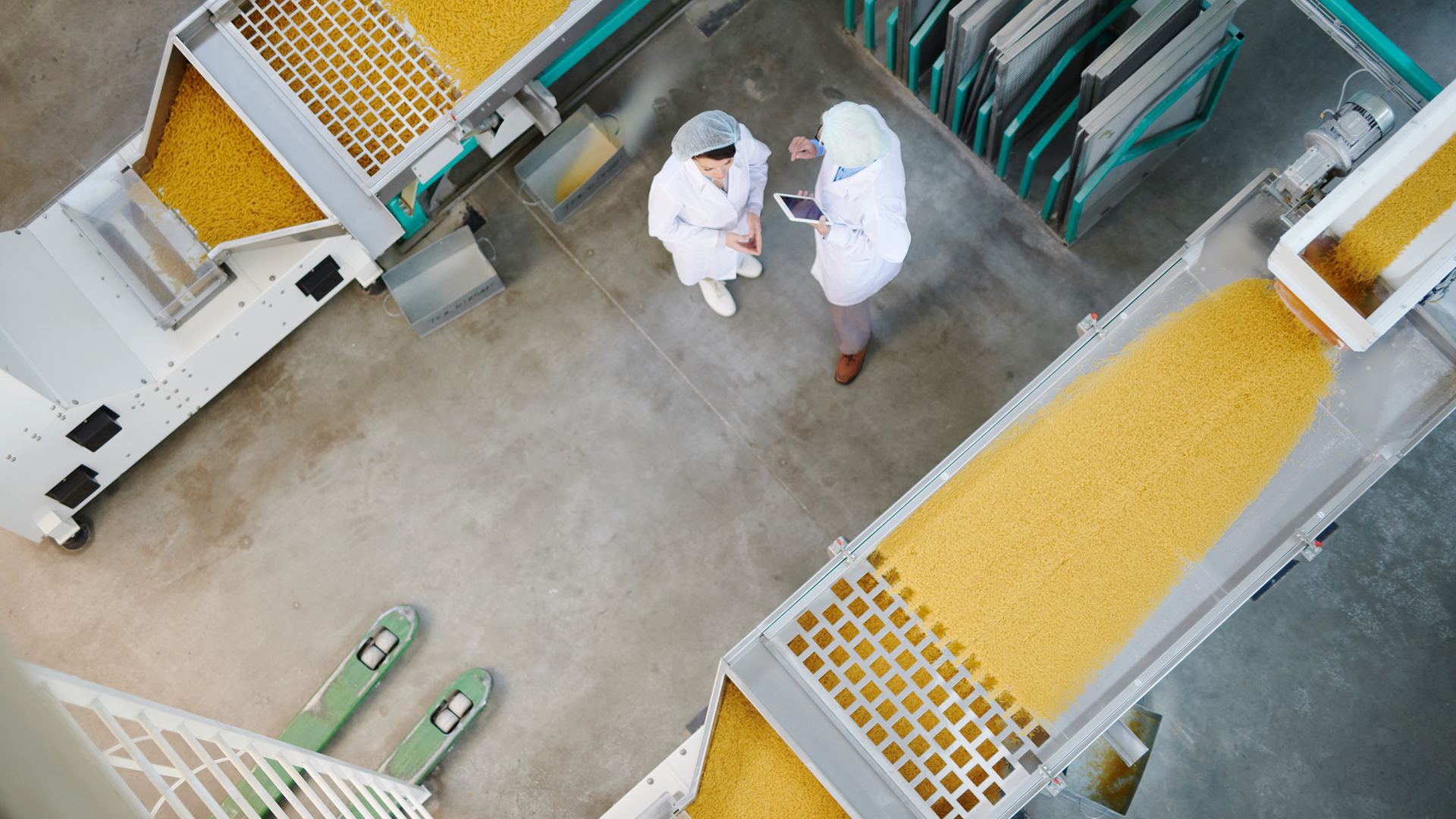
DryProduktionsumgebungen für trockene und haltbare Lebensmittel sind geprägt von langen Produktionsläufen, thermischer Belastung und mechanischem Verschleiß. Im Gegensatz zu gekühlten oder tiefgekühlten Prozessen setzen diese Abläufe auf Durchsatz und kontinuierlichen Betrieb, was die Auswirkungen unerwarteter Ausfälle erhöht.
Diese Kategorie umfasst Back- und Snackproduktion, Getreide- und Kornverarbeitung, pulverförmige Produkte sowie Konserven und haltbare Lebensmittel.
Die wichtigsten Instandhaltungsanforderungen in diesen Umgebungen sind:
- Umfangreiche Nutzung von Prozessanlagen unter kontinuierlicher Last, einschließlich Öfen, Trockner, Mischer und Mühlen
- Staubentwicklung, die zu abrasivem Verschleiß, Verunreinigungen und potenziellen Explosionsrisiken beiträgt
- Wiederholte Heiz- und Kühlzyklen, die zu thermischer Ermüdung in Back-, Röst- oder Trocknungsprozessen führen
- Sehr lange Produktionskampagnen, die die Möglichkeiten für Wartung stark einschränken
Unter diesen Bedingungen entwickelt sich Verschleiß oft schleichend und bleibt unbemerkt, bis es zu plötzlichen Ausfällen, Qualitätsabweichungen oder Sicherheitsvorfällen kommt. Da Produktionsstopps besonders störend und kostspielig sind, ist die frühzeitige Erkennung von mechanischem Verschleiß, Unwucht oder Überhitzung entscheidend, um eine stabile Produktion sicherzustellen und ungeplante Stillstände zu reduzieren.
Welche überproportionalen Vorteile bietet Predictive Maintenance für Lebensmittel- und Getränkeanlagen?
Predictive Maintenance (PdM) schafft in jeder anlagenintensiven Industrie Mehrwert. In der Lebensmittel- und Getränkeindustrie sind die Vorteile jedoch überproportional hoch, aufgrund einer einzigartigen Kombination struktureller Faktoren: kontinuierliche Produktion, begrenzte Wartungsfenster, strenge Hygieneanforderungen und hohe Kosten ungeplanter Stillstände. PdM reduziert Stillstandszeiten nicht nur durch die Vermeidung von Ausfällen, sondern auch durch die Ausrichtung von Instandhaltungsmaßnahmen an den betrieblichen Realitäten der Produktion.
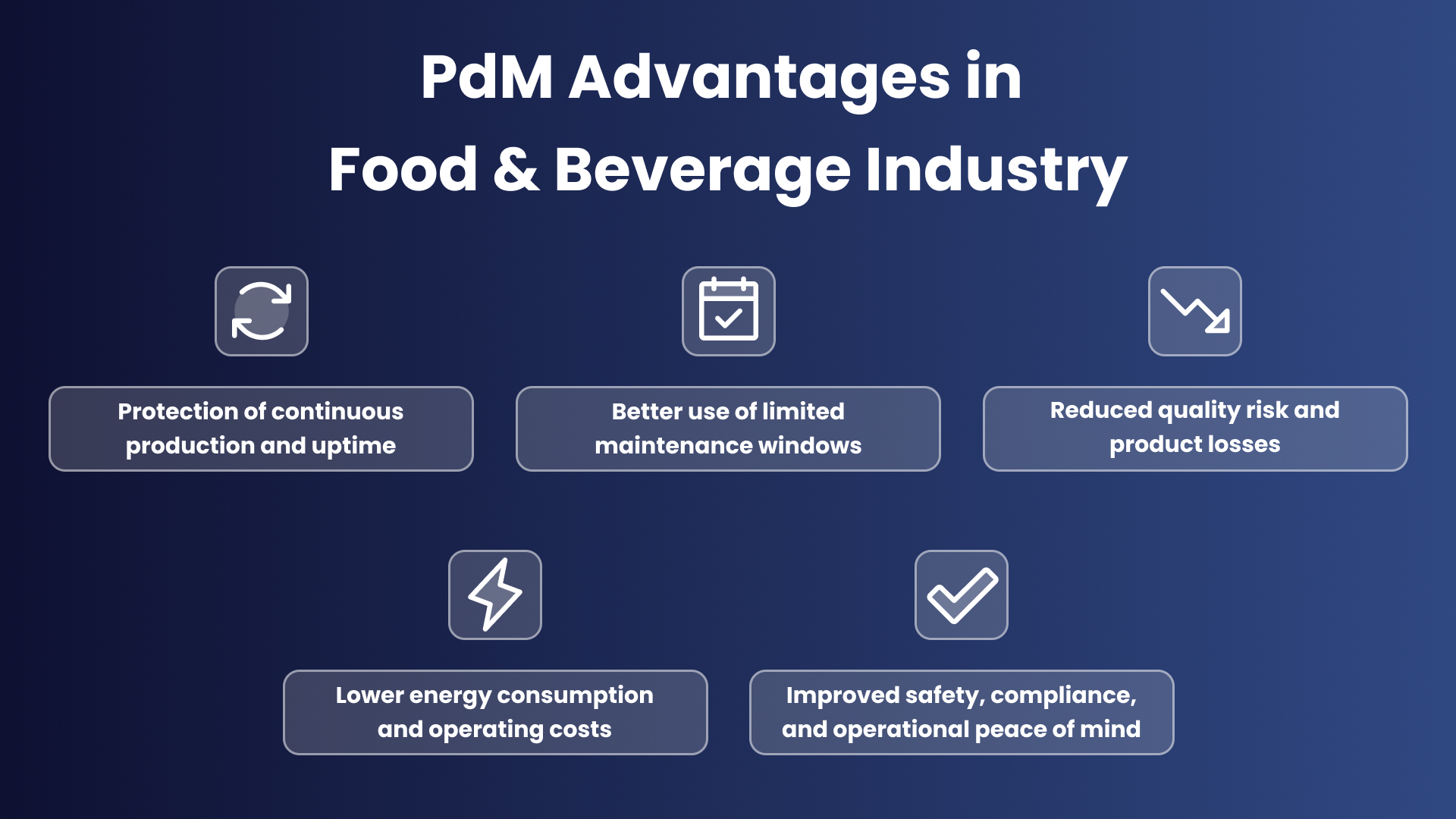
Für Hersteller in der Lebensmittel- und Getränkeindustrie bietet Predictive Maintenance Vorteile, die weit über reine Wartungseffizienz hinausgehen. PdM ermöglicht:
- Geringere Exposition gegenüber ungeplanten Stillständen, bei gleichzeitiger Sicherstellung einer kontinuierlichen Produktion
- Bessere Nutzung begrenzter Wartungsfenster
- Reduzierte Qualitätsrisiken und geringere Produktverluste
- Geringere Energieverluste und Betriebskosten
- Verbesserte Sicherheit, Compliance und operative Sicherheit im Betrieb
Want to Start Predicting Failures in Your Food & Beverage Plant?
I-care collects asset health data using a range of condition monitoring technologies, including its own Wi-care wireless sensors. This data is ingested and analyzed by I-see, I-care’s Predictive Maintenance software, not only to predict failures, but also to turn asset insights into clear maintenance priorities and actionable decisions across your plant.
Protecting Continuous Production and Uptime
In Food & Beverage plants, production lines operate as tightly synchronized systems. A single degrading component rarely fails in isolation. Mechanical issues on critical assets such as grinders, fillers, or conveyors can quickly propagate across interconnected processes, disrupting downstream operations and forcing full-line stoppages.
Predictive Maintenance (PdM) creates value in this context by detecting early-stage degradation before it has a significant impact on the production flow. By identifying faults while equipment is still operating normally, PdM enables maintenance teams to intervene at a controlled moment, intercepting localized issues from cascading into widespread downtime.
What this means in practice:
- Local faults are contained before affecting the entire line
- Production flow remains stable on high-throughput, tightly synchronized assets
- Unplanned downtime is avoided without disrupting sanitation or delivery schedules
Real-World Example
At Barry Callebaut, early detection of bearing degradation on critical cocoa grinders enabled maintenance teams to maintain the equipment until a scheduled technical stop. By intervening before failure, the site avoided dozens of hours of unplanned downtime on assets located at the heart of a tightly synchronized production flow, where even a short disruption would have impacted multiple downstream processes.
Discover Barry Callebaut’s success story with Predictive Maintenance

Making the Most of Limited Maintenance Windows
In Food & Beverage plants, maintenance is rarely performed when it is technically convenient. Interventions are constrained by sanitation cycles, production campaigns, and regulatory requirements. When failures occur unexpectedly, maintenance teams are forced to intervene outside planned windows, often triggering additional cleaning, revalidation, and production losses.
Predictive Maintenance (PdM) creates value by shifting maintenance from reactive execution to prepared intervention. By detecting early faults, PdM provides the lead time needed to diagnose the issue, assess severity, prepare spare parts, and plan resources before access becomes available. This readiness ensures that when a maintenance window opens, interventions are precise, efficient, and limited in scope.
What this means in practice:
- Maintenance work is executed during planned windows, not forced by breakdowns
- Interventions are shorter, better prepared, and less disruptive
- Coordination between maintenance, production, and sanitation improves
Real-World Example
At Lutosa, the transition toward continuous frozen-food production made weekend breakdowns particularly costly. By applying predictive vibration monitoring, early mechanical degradation was detected in advance, allowing actions to be scheduled during planned maintenance windows. This reduced emergency call-outs and restored operational stability without disrupting production or sanitation routines.
Discover Lutosa’s success story with Predictive Maintenance
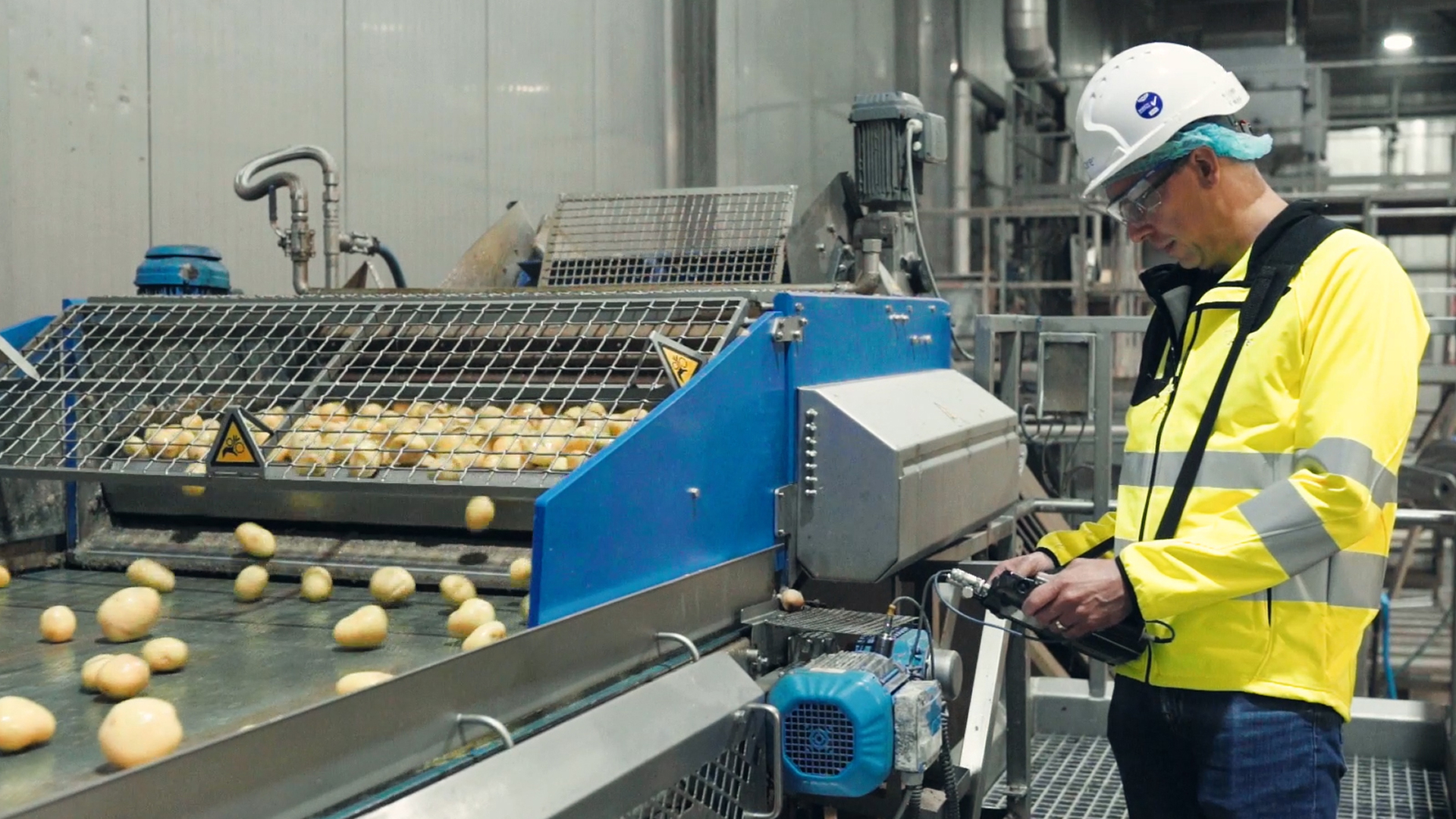
Reducing Quality Risk and Product Losses
In Food & Beverage operations, quality losses are often irreversible. Once a product is overcooked, underfilled, improperly sealed, or exposed to temperature deviation, it cannot be reworked without compromising quality or compliance. As a result, even small deviations can immediately erode first-pass yield (FPY).
Predictive Maintenance (PdM) creates value by detecting asset-related process drift before it translates into off-spec product. Early mechanical and electrical degradation, such as misalignment, wear, or unstable motor behavior, acts as leading indicators long before quality deviations trigger alarms or final inspections. By identifying these deviations at the asset level, PdM enables actions before asset-related defects propagate into the finished product.
What this means in practice:
- First-pass yield is protected by maintaining stable process conditions
- Scrap and rework caused by gradual drift are reduced
- Quality performance improves without increasing inspection effort
Real-World Example
On high-speed processing and packaging lines, early detection of mechanical wear or misalignment prevents gradual drift that would otherwise reduce first-pass yield and only be detected during final inspection, when entire batches may already be lost.
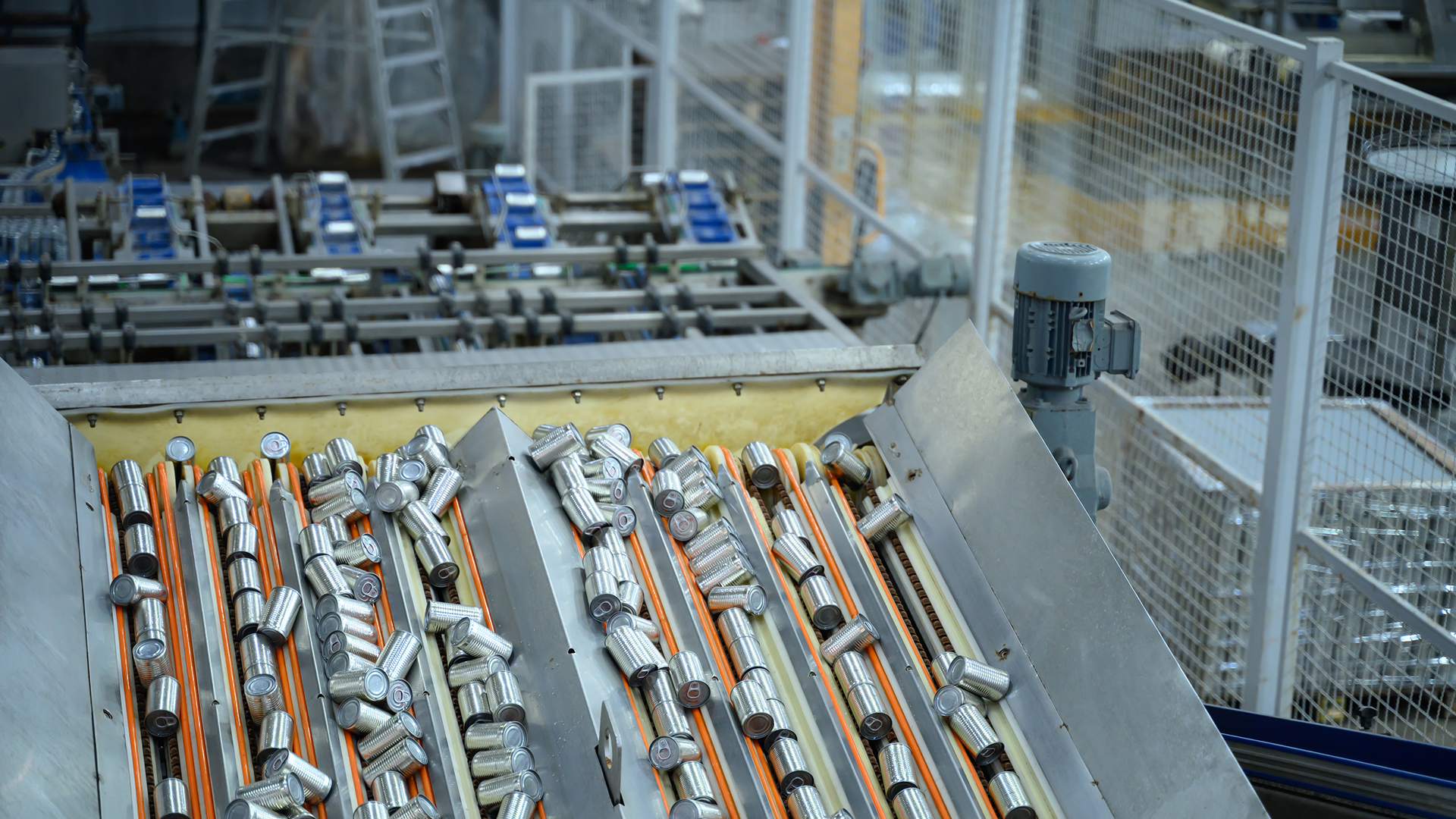
Lowering Energy Consumption and Operating Costs
Food & Beverage plants operate energy-intensive systems that run continuously, including compressors, refrigeration units, pumps, ovens, dryers, and utilities. When mechanical degradation, leaks, or imbalance occur, assets often continue to operate while consuming more energy. These losses rarely trigger alarms or production stops, but they silently increase operating costs over time.
Predictive Maintenance (PdM) creates value by making continuous efficiency losses visible, enabling targeted actions that can reduce energy consumption when addressed. Techniques such as vibration analysis, ultrasound, and infrared thermography detect early inefficiencies, compressed air leaks, steam losses, friction, or abnormal loading, while equipment remains in service. By identifying these issues early, PdM allows plants to address inefficiencies before they become structural cost drivers.
What this means in practice:
- Energy waste caused by degradation and leaks is detected early
- Utilities operate closer to their optimal efficiency point
- Operating costs can be reduced when identified inefficiencies are addressed, without sacrificing uptime or quality
Real-World Example
At Royal Cosun, systematic condition monitoring of utilities and electrical installations revealed hidden inefficiencies in compressed air and energy distribution systems. Addressing these issues reduced energy consumption, improved asset efficiency, and delivered measurable cost savings without affecting production continuity.
Discover Royal Cosun’s success story with Predictive Maintenance
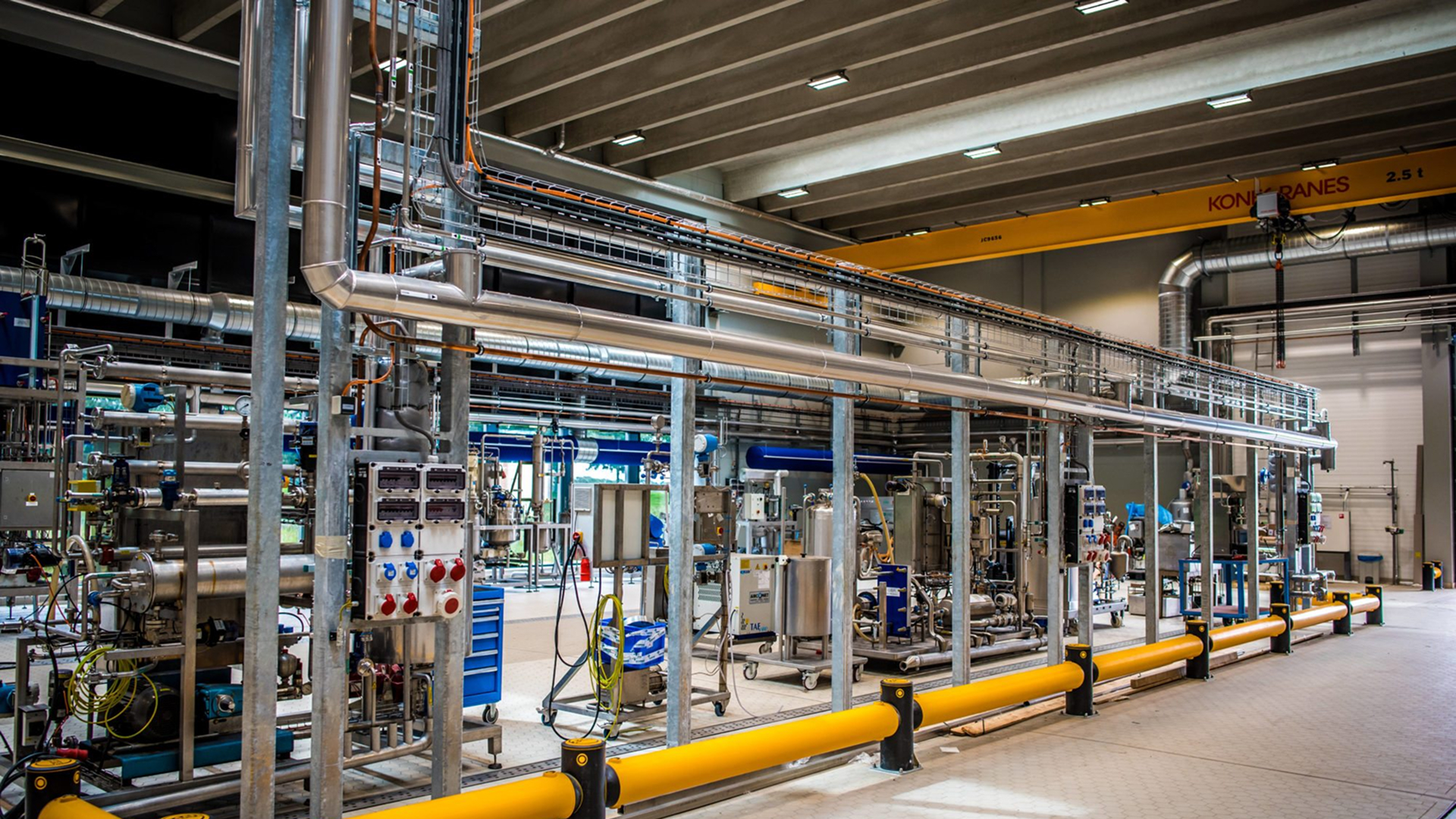
Supporting Safety, Compliance, and Peace of Mind
Food & Beverage plants operate under strict regulatory and insurance scrutiny, often exceeding that of many other industrial industries. Electrical faults, overheating, mechanical degradation, or abnormal operating conditions may not immediately affect production, but they can evolve into safety incidents, fires, or non-compliance findings with severe operational and financial consequences.
Predictive Maintenance (PdM) creates disproportionate value by shifting risk detection upstream. By continuously monitoring asset condition, PdM identifies abnormal thermal, electrical, or mechanical behavior long before it reaches a critical threshold. This allows actions to be taken, reducing the likelihood of incidents and providing objective evidence that risks are being actively managed.
What this means in practice:
- Safety risks are identified and mitigated before incidents occur
- Compliance efforts are supported by documented, repeatable inspections
- Maintenance and management teams gain confidence and operational peace of mind
Real-World Example
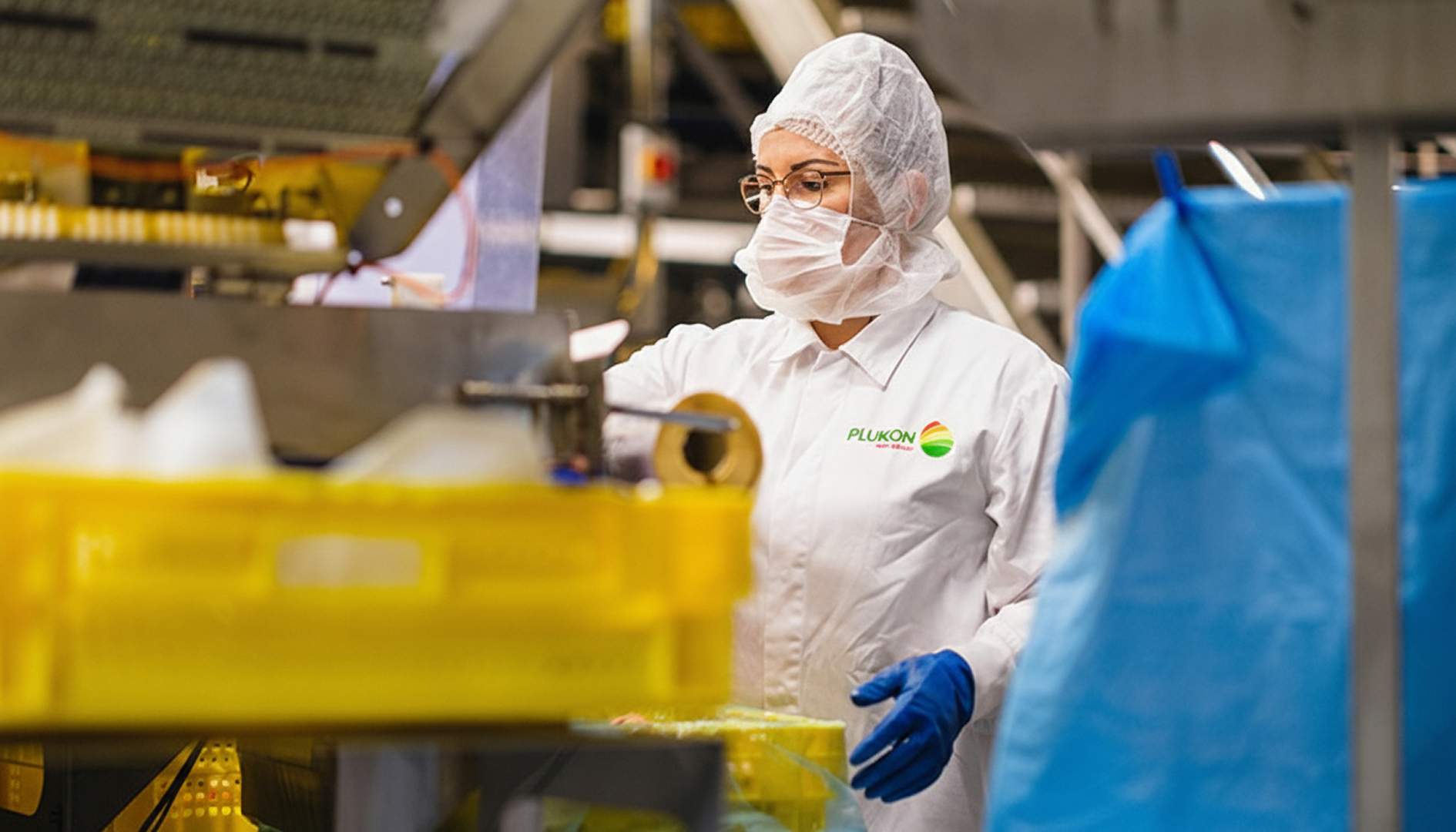
At Plukon Food Group, standardized thermographic inspections combined with centralized reporting provided clear visibility into electrical risks across multiple sites. This proactive approach reduced incidents, improved uptime, and strengthened the company’s position with insurers by demonstrating structured and traceable risk management practices.
Discover Plukon’s success story with Predictive Maintenance
Which PdM Technologies to Choose to Monitor Food & Beverage Assets?
Choosing the right Predictive Maintenance (PdM) technologies in Food & Beverage (F&B) starts with asset criticality and failure risk, not with tools.
The most suitable technique depends on:
- How an asset fails (mechanical, electrical, thermal, or lubrication-related)
- Where it operates (washdown zones, cold environments, hygienic areas)
- How production runs (batch or continuous)
As a result, effective PdM programs combine complementary approaches, ranging from sensor technologies to electrical, analytical, and laboratory-based methods, applied selectively rather than through a one-size-fits-all approach.
In practice, F&B manufacturers typically rely on a combination of core Predictive Maintenance techniques, complemented by specialized diagnostic tools, including:
- Vibration Analysis, to detect mechanical issues such as imbalance, misalignment, bearing defects, and gear wear on rotating equipment
- Ultrasound Analysis, to identify compressed air and gas leaks, steam trap failures, and electrical discharges
- Infrared Thermography, to detect overheating in electrical installations, motors, and process equipment without physical contact
- Oil Analysis, to monitor lubricant condition, contamination, and internal wear in gearboxes, compressors, and other oil-lubricated assets
- Electrical and Motor Circuit Analysis, to assess motor health, power quality, and electrical degradation
- Motion Magnification, to visualize subtle mechanical movements and structural vibration that are invisible to the naked eye
| Condition Monitoring Technique | Typical Assets Monitored | Failure Modes Detected | Why It’s Relevant in Food & Beverage | Typical Deployment |
| Vibration Analysis | Motors, pumps, fans, gearboxes, compressors, mixers, agitators | Imbalance, misalignment, bearing wear, looseness, gear defects | Backbone of PdM in F&B. Ideal for high-speed, continuous production assets | Route-based, wireless sensors, online monitoring |
| Ultrasound Monitoring | Compressed air & gas systems, steam traps, valves, slow-speed bearings, electrical switchgear | Leaks, friction, steam trap failures, electrical discharge | Critical for energy-intensive plants. Works well in noisy, wet, washdown environments | Handheld inspections, targeted monitoring |
| Infrared Thermography | Electrical panels & MCCs, motors, drives, ovens, dryers, refrigeration components | Overheating, loose connections, insulation defects, thermal imbalance | Non-contact and hygienic. Widely used for electrical fire prevention and safety | Periodic inspections, screening campaigns |
| Oil Analysis | Gearboxes, compressors, hydraulic systems, enclosed bearings | Internal wear, contamination, lubricant degradation | Detects failure modes invisible to surface sensors. supports food-grade lubricant control | Periodic sampling and lab analysis |
| Electrical & Motor Circuit Analysis | Motors, drives, power supply systems | Insulation degradation, phase imbalance, power quality issues | Early detection of electrical root causes in motor-dense, high-uptime plants | Offline tests, online electrical monitoring |
| Motion Magnification | Machine structures, frames, supports, complex assemblies | Structural resonance, looseness, abnormal vibration behavior | Non-contact, expert-level diagnostic tool for complex or unexplained issues | Targeted investigations |
Not Sure Which Pdm Technologies to Use?
At I-care, our experts help you assess asset criticality, operating conditions, and failure risks to define a Predictive Maintenance strategy tailored to your Food & Beverage plant.
Vibration Analysis
Vibration Analysis is primarily applied to rotating equipment that is critical to Food & Beverage production, including:
- Motors, pumps, and fans driving production and utility systems
- Gearboxes, often operating continuously under load
- Compressors, particularly in air and refrigeration systems
- Mixers and agitators, where mechanical stress and imbalance are common
These assets are often central to continuous or high-speed production processes.
Why does it fit Food & Beverage?
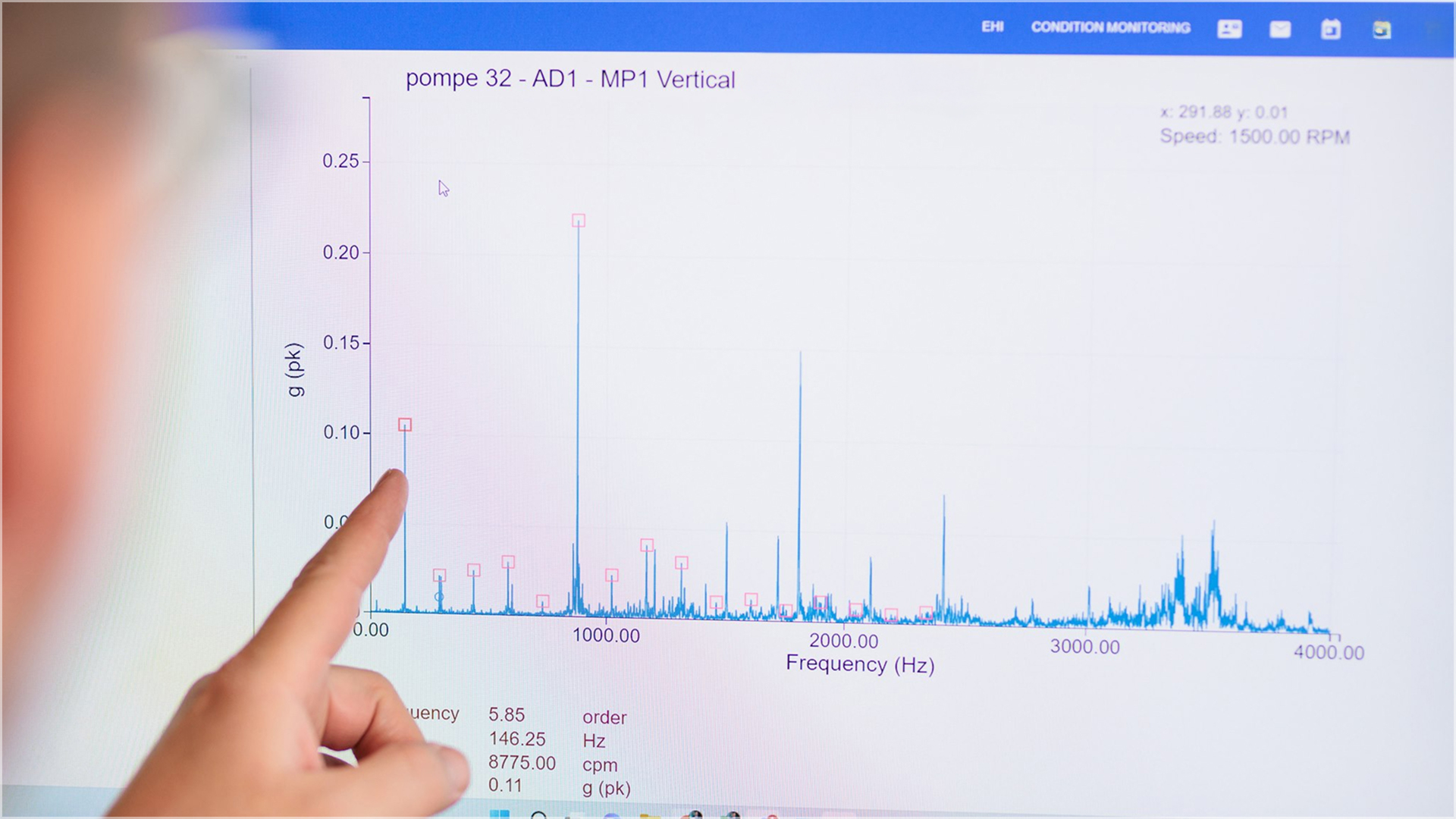
Vibration Analysis is particularly well-suited to Food & Beverage (F&B) environments because it enables early detection of mechanical degradation, such as imbalance, misalignment, bearing wear, or looseness, while equipment is still running normally. These fault types are among the most common root causes of unplanned downtime in F&B plants.
The technique performs well on high-speed lines and continuously operating equipment, where small mechanical deviations can escalate quickly and where stopping production for inspection is costly or impractical.
Vibration Analysis can be deployed through:
- Portable, route-based measurements for periodic monitoring
- Wireless sensors for assets that are difficult to access or exposed to washdown conditions
- Online monitoring systems for critical equipment requiring continuous visibility
This adaptability allows Food & Beverage plants to match monitoring intensity to asset criticality and production constraints without disrupting operations.
Because it delivers reliable diagnostics on the most common mechanical failure modes and supports both route-based and continuous monitoring strategies, Vibration Analysis often forms the foundation of Predictive Maintenance programs in Food & Beverage plants, complemented by other techniques to address electrical, thermal, or process-related risks.
Real-World Example
At Barry Callebaut, vibration monitoring on critical cocoa grinders enabled early detection of bearing degradation. Maintenance teams were able to intervene during scheduled technical stops, avoiding unplanned downtime on assets central to production flow and preventing disruptions across tightly synchronized processes.
Ultrasound Analysis
Ultrasound Analysis is primarily applied to assets and systems that generate high-frequency acoustic emissions, including:
- Compressed air and gas systems, where leaks are a major source of energy loss
- Steam traps and steam distribution systems, critical in thermal processes
- Valves, particularly those subject to wear, leakage, or improper sealing
- Bearings, especially slow-speed or intermittently loaded bearings
- Electrical switchgear, where partial discharge, arcing, or corona can be detected
These assets are common, particularly in utilities, energy distribution, and supporting infrastructure that directly impact production efficiency and operating costs.
Why does it fit Food & Beverage?
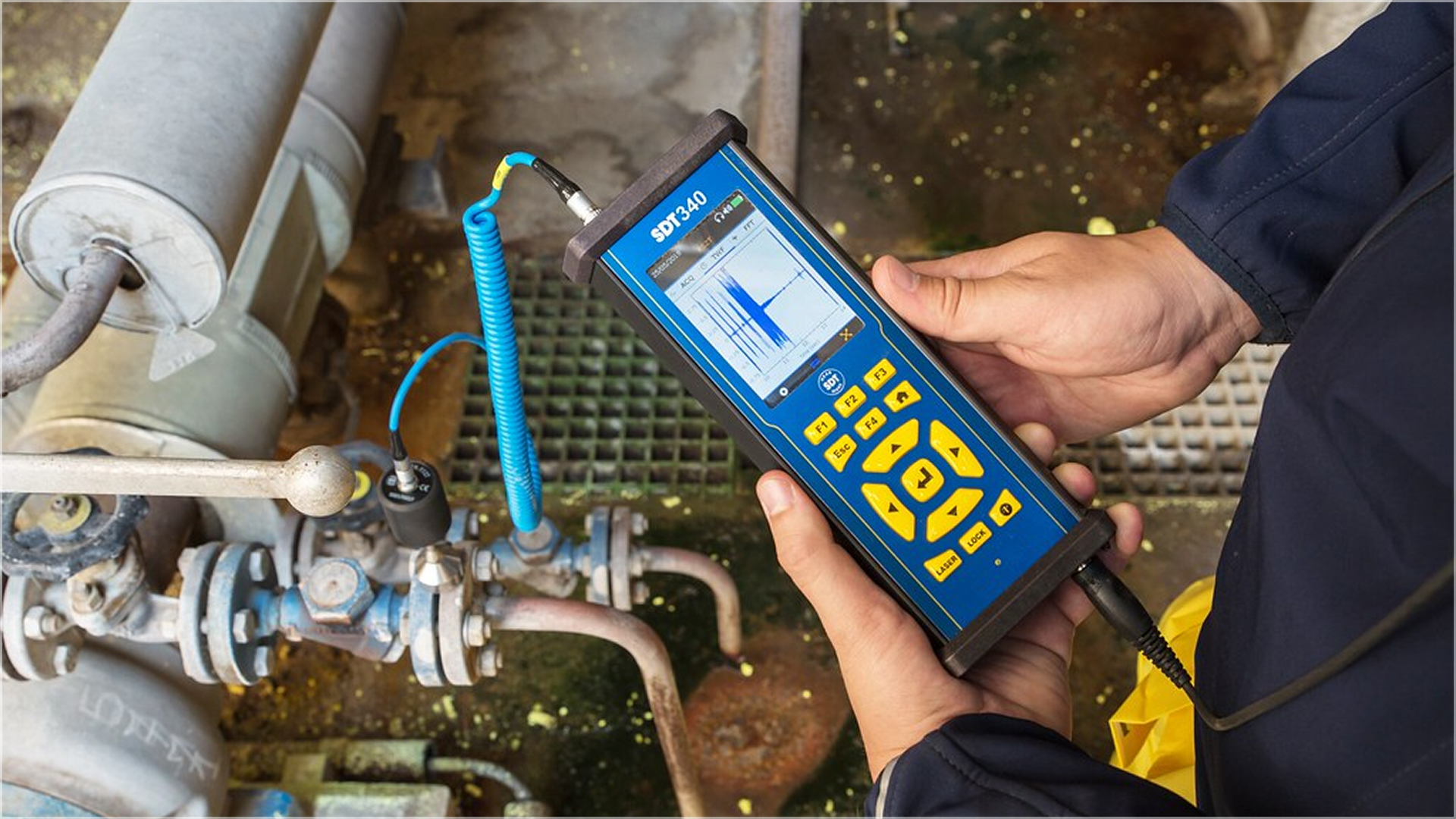
Ultrasound Analysis is particularly well-suited to Food & Beverage (F&B) environments because it excels at detecting leaks, friction, and electrical discharge in conditions where other techniques may be less effective.
F&B plants are highly energy-intensive, with extensive compressed air and steam networks. Even small leaks can result in significant and continuous energy losses, often remaining unnoticed because they do not immediately affect production output. Ultrasound enables early identification of these inefficiencies while systems remain in operation.
The technique also performs well in noisy, wet, or washdown environments, where vibration or visual inspection may be limited. Because ultrasound sensors focus on high-frequency sound outside the audible range, they remain effective even in production areas with high ambient noise.
In addition, Ultrasound Monitoring complements vibration analysis by covering assets that are:
- Difficult to instrument with vibration sensors
- Operating at very low speeds
- Part of utility or auxiliary systems rather than core production machinery
This makes ultrasound a valuable tool for expanding Predictive Maintenance coverage beyond rotating production equipment.
Real-World Example
At Royal Cosun, ultrasound inspections were used as part of a broader proactive maintenance and risk-management program to identify compressed air and steam leaks across multiple Food & Beverage sites. By detecting and resolving these leaks early, the company reduced energy waste, improved utility efficiency, and extended the lifespan of critical equipment such as compressors, while increasing overall plant uptime.
Infrared Thermography
Infrared Thermography is primarily applied to assets and systems where abnormal heat is an early indicator of failure, including:
- Electrical panels, switchgear, and MCCs, where loose connections or overloads can lead to overheating
- Motors and drives, particularly those operating under variable load
- Ovens, dryers, and furnaces, common in thermal processing environments
- Refrigeration components, such as compressors, condensers, and electrical cabinets
These assets are often associated with safety risks, energy losses, or production interruptions when degradation goes undetected.
Why does it fit Food & Beverage?
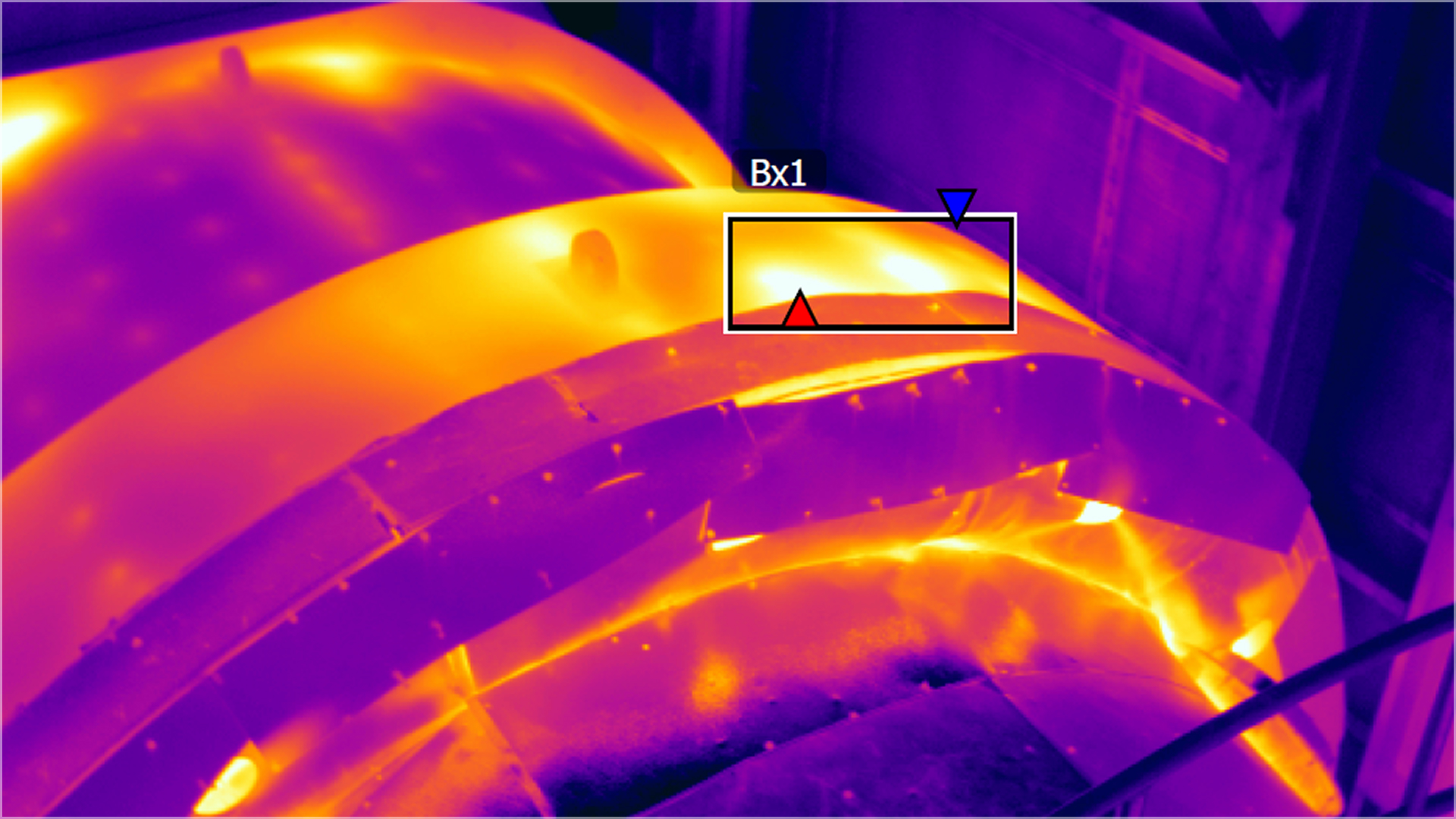
Infrared Thermography is particularly well-suited to Food & Beverage (F&B) environments because it is a non-contact and non-intrusive inspection technique. This makes it fully compatible with hygiene and food safety requirements, as inspections can be carried out without touching equipment or disrupting production.
The technique is especially effective for electrical fire prevention, a critical concern in F&B plants where insurers and regulators place strong emphasis on electrical safety. By identifying abnormal temperature rises early, thermography allows actions to be taken before failures escalate into incidents or unplanned downtime.
Infrared Thermography is also valuable in cold and thermal processing environments. In frozen food plants, it helps detect insulation defects, abnormal heat generation, or electrical issues in refrigeration systems. In bakeries or drying processes, it supports the monitoring of ovens and heaters to ensure stable and efficient operation.
Because it can be deployed during normal operation and across large areas quickly, Infrared Thermography is often used as a preventive and predictive screening tool, complementing other condition monitoring techniques.
Real-World Example
At Plukon Food Group, standardized thermographic inspections were deployed across multiple Food & Beverage sites to assess the condition of electrical installations. By centralizing thermographic data and applying a uniform inspection methodology, Plukon improved visibility into electrical risks, reduced incidents, increased uptime, and strengthened its position with insurers by demonstrating a proactive and transparent approach to electrical safety management.
Oil Analysis
Oil Analysis is primarily applied to oil-lubricated assets where internal wear or lubricant degradation cannot be detected from the outside, including:
- Gearboxes, often operating under continuous load
- Compressors, particularly in refrigeration and utility systems
- Hydraulic systems used in processing or packaging equipment
- Large enclosed bearings, where visual or vibration access is limited
These assets are often critical to production continuity, energy efficiency, and asset longevity.

Why does it fit Food & Beverage?
Oil Analysis fits Food & Beverage (F&B) environments because it detects wear mechanisms and contamination that surface-based techniques cannot see. Analyzing lubricant condition, particles, and chemical properties provides early insight into internal degradation such as wear, corrosion, or lubricant breakdown.
This makes Oil Analysis particularly valuable for:
- Sealed or slow-speed assets, where vibration signatures may be weak
- Critical compressors and gearboxes, where failures are costly and often catastrophic
- Lubrication-intensive environments, where lubricant health directly affects asset reliability
In F&B plants, Oil Analysis also supports the monitoring of food-grade lubricants, helping ensure that lubrication practices remain both effective and compliant with hygiene and safety requirements.
Because samples can be taken without stopping equipment, Oil Analysis enables condition monitoring without disrupting production, making it well-suited to continuous or high-uptime operations.
Real-World Example
At a global Food & Beverage industry leader, Predictive Maintenance programs were expanded beyond vibration monitoring to include reliability-centered lubrication practices across multiple sites. By improving lubricant management and condition monitoring on critical assets, the company extended equipment life, reduced failure risk, and supported consistent reliability standards across its global operations.
Electrical & Motor Circuit Analysis
Electrical and Motor Circuit Analysis is primarily applied to motor-driven and electrically supplied assets that are critical to Food & Beverage operations, including:
- Electric motors, driving production and utility equipment
- Variable frequency drives (VFDs) and motor control systems
- Power supply systems, including panels, feeders, and connections
These assets are ubiquitous in Food & Beverage plants, where production relies on a high density of motors operating continuously under varying loads.
Why does it fit Food & Beverage?
Electrical & Motor Circuit Analysis fits Food & Beverage environments because it enables early detection of electrical degradation that mechanical monitoring alone cannot reveal. This includes insulation deterioration, phase imbalance, power quality issues, and abnormal electrical stress that can ultimately lead to motor failure or unplanned downtime.
In motor-dense plants operating under tight uptime constraints, electrical faults often develop before mechanical symptoms become visible. Electrical monitoring, therefore, complements vibration analysis by identifying root causes linked to the power supply or motor condition itself, rather than the mechanical consequences downstream.
This technique is particularly relevant in Food & Beverage plants because:
- Motors are exposed to humidity, washdowns, and thermal cycling, which accelerate insulation aging
- Variable loads and frequent starts place additional stress on electrical components
- Unplanned motor failures can rapidly stop entire production lines
By detecting electrical anomalies early, maintenance teams can intervene before faults escalate into breakdowns that disrupt continuous production.
Real-World Example
At Royal Cosun, electrical condition monitoring and inspections were deployed across multiple Food & Beverage sites as part of a structured, proactive risk-management program. By identifying electrical degradation and fire risks early, particularly within electrical cabinets, the company improved operational safety, increased uptime, and strengthened compliance and insurability across its global operations.
Motion Magnification
Motion Magnification is primarily applied to assets and structures where very small mechanical movements or vibrations are difficult to detect with conventional sensors, including:
- Structural elements, such as frames, supports, and machine bases
- Large or complex assemblies, where vibration behavior is difficult to interpret
- Inaccessible or hazardous areas, where installing sensors is impractical
- Equipment exhibiting unexplained vibration or resonance, despite normal sensor readings
Rather than relying on contact sensors, Motion Magnification amplifies subtle movements captured by video, making otherwise invisible motion patterns visible and measurable.
Why does it fit Food & Beverage?
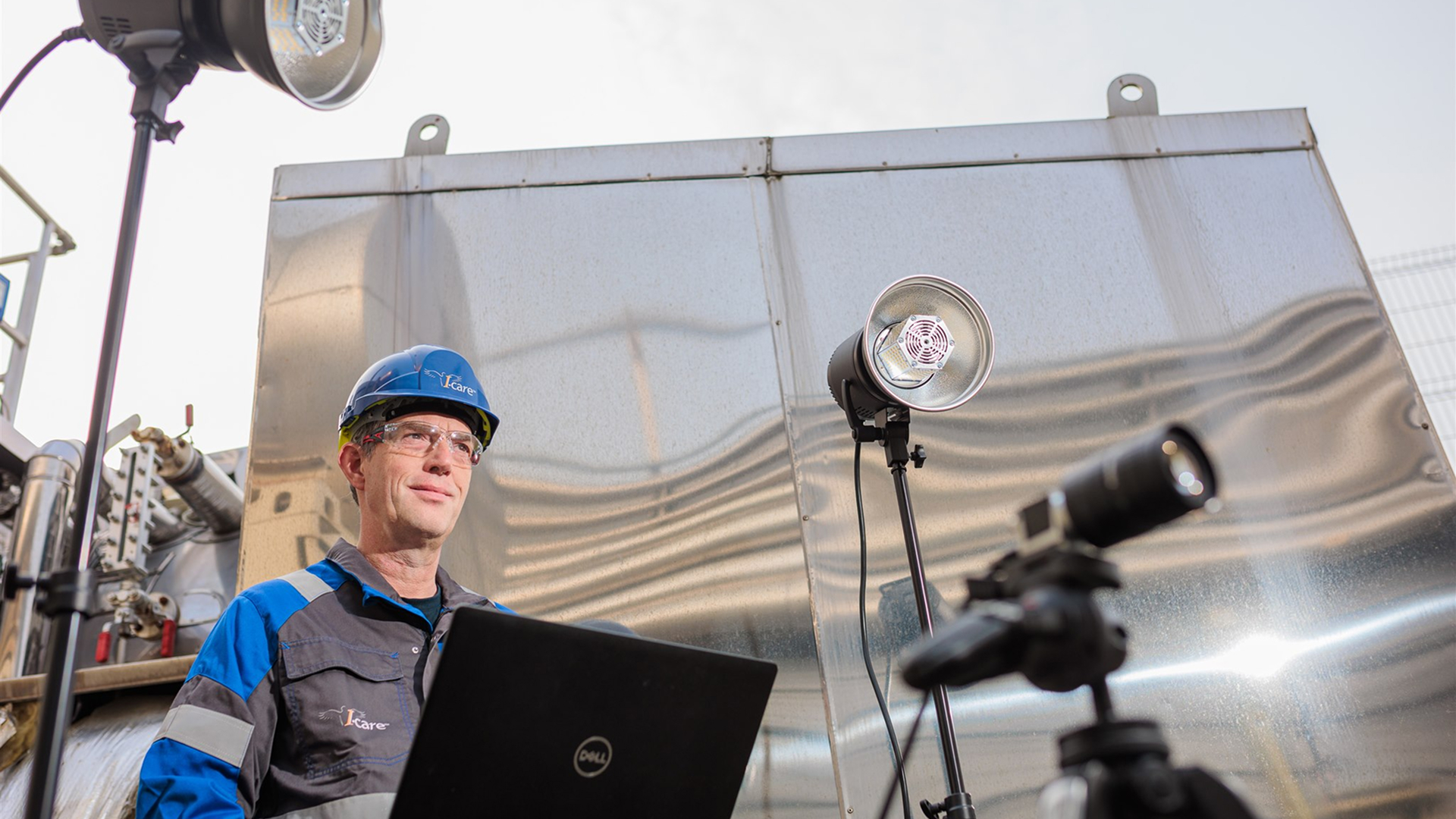
Motion Magnification fits Food & Beverage (F&B) environments as a complementary diagnostic and troubleshooting technique, particularly when conventional condition monitoring methods do not provide clear answers.
F&B plants often operate complex production lines where multiple machines, structures, and foundations interact. In such environments, issues like structural resonance, looseness, or transmission of vibration between machines can be difficult to diagnose using vibration or ultrasound data alone. Motion Magnification helps visualize how equipment and structures move in real operating conditions, providing valuable insight into the source of abnormal behavior.
The technique is also well-suited to hygienic and constrained environments, as it is:
- Non-contact, with no sensors attached to equipment
- Deployable without stopping production
- Useful in areas where washdowns, temperature, or access limitations restrict sensor installation
Because Motion Magnification is typically used for targeted investigations rather than continuous monitoring, it is most effective when applied by experienced analysts to support root-cause analysis, validate suspected issues, or guide actions.
In Food & Beverage Predictive Maintenance programs, Motion Magnification is therefore positioned as an expert-level, complementary tool, enhancing understanding of complex mechanical behaviour rather than replacing core monitoring techniques such as vibration or ultrasound.
IIoT Sensors and a PdM software
Condition monitoring techniques create value in Food & Beverage plants. But when they are scaled, connected, and operationalized through IIoT sensors (e.g., Wi-care sensor) and a Predictive Maintenance platform (e.g., I-see software), they enable real-time monitoring and dramatically increase value, moving from isolated insights to plant-wide, actionable intelligence.
Food & Beverage plants typically operate hundreds or thousands of assets across production, utilities, refrigeration, and packaging. Relying solely on manual inspections or isolated measurements quickly becomes unmanageable. IIoT sensors enable real-time, automated data collection from assets, even in environments characterized by washdowns, humidity, cold temperatures, or restricted access.
But the value of Predictive Maintenance (PdM) does not come from sensors alone. It comes from how data is transformed into decisions, which is why sensors stream their data into a PdM platform.
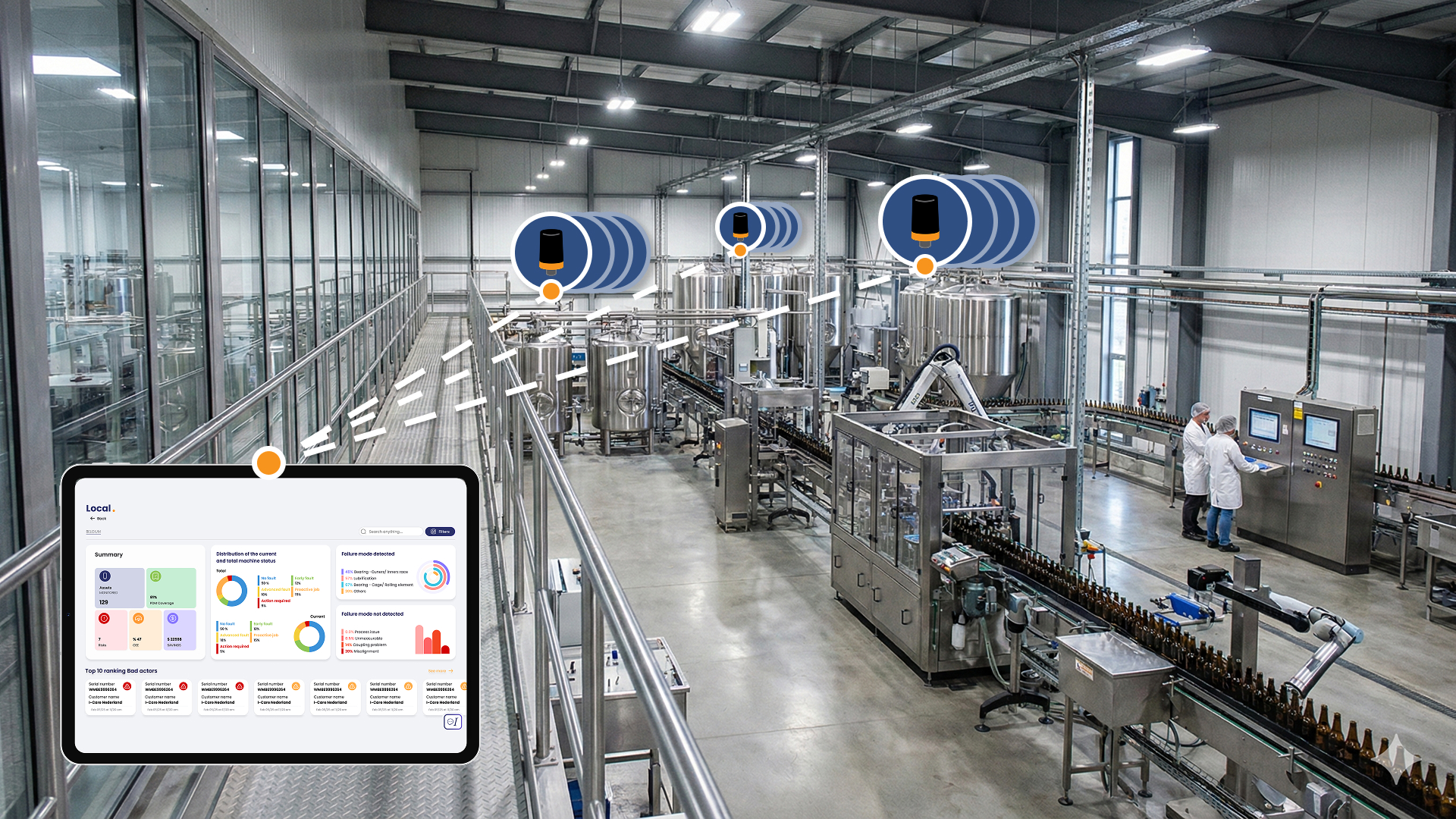
This platform plays a critical role by:
- Aggregating data from multiple condition monitoring technologies, regardless of data collector type or data source
- Normalizing and contextualizing measurements using asset metadata, operating conditions, and historical baselines
- Detecting anomalies and degradation trends that indicate emerging failures, using advanced analytics and machine learning models to support expert analysis by comparing historical and real-time asset data against established baselines and highlighting emerging risks
- Supporting risk prioritization based on asset criticality, potential production impact, and identified compliance-related exposure
- Transforming insights into actions, such as alerts, maintenance recommendations, or work orders
In Food & Beverage, this integration is particularly important because maintenance decisions must align with sanitation cycles, production schedules, and quality constraints.
IIoT sensors and a PdM software act as the connective tissue of a Predictive Maintenance strategy. They ensure that data collected at the asset level is transformed into clear, actionable intelligence at the plant level.
Curious How IIoT Sensors and a PdM Sensor Work Together at Plant Scale?
I-care combines its Wi-care wireless sensors, collecting vibration, impact, and temperature data, with the I-see Predictive Maintenance software to analyze asset health, connect multiple condition monitoring technologies, and integrate insights directly into maintenance workflows through links with platforms such as CMMS.
Building a Scalable Predictive Maintenance Strategy in Food & Beverage
Predictive Maintenance (PdM) does not necessarily start with full online monitoring across the entire plant. It can build progressively, based on operational maturity, asset criticality, and production constraints. Implementing predictive maintenance successfully in Food and Beverage industry requires a clear roadmap that translates strategy into actionable steps, aligned with production realities and organizational readiness
In practice, most Food & Beverage plants still evolve through clear and natural stages, but with a PdM software in place from the very beginning. Many start by monitoring a limited number of assets using portable inspections and a first set of sensors, with all collected data immediately centralized in a Predictive Maintenance platform. This allows early failure patterns to be identified, baselines to be built, and insights to be shared consistently across teams.
As value is demonstrated, monitoring is progressively extended to additional assets, while continuing to rely on the same platform to aggregate data, standardize analysis, and prioritize actions. Over time, Predictive Maintenance scales not by adding disconnected tools, but by expanding asset coverage on a unified PdM architecture across lines, utilities, and sites.tive tissue of a Predictive Maintenance strategy. They ensure that data collected at the asset level is transformed into clear, actionable intelligence at the plant level.
What About the Upfront Investment in a PdM Project?
The initial investment required to move from pilot projects to broader deployment can sometimes slow down decision-making. At I-care, this barrier can be reduced through instrument leasing models that convert traditional capital expenditure into operational expenditure, either via subscription-based approaches or hybrid CapEx–OpEx combinations. This flexibility allows Food & Beverage manufacturers to start small, scale progressively, and align investment with realized value, without committing to heavy upfront spending.
As Predictive Maintenance scales, its role also evolves. It is no longer just a technical maintenance tool, but a business enabler focused on improving reliability across production, utilities, and supporting infrastructure.
In Food & Beverage plants, PdM contributes directly to:
- Protection of margins, by reducing unplanned downtime, waste, and energy losses
- Reduction of operational risk, through early detection of mechanical, electrical, and process-related issues
- Reduction of asset-related risks that could impact food quality or compliance, by stabilizing critical equipment and lowering the likelihood of incidents
- Improvement of OEE and energy efficiency, by maintaining equipment in optimal operating conditions
Building a scalable Predictive Maintenance strategy, therefore, means tying together the diversity of Food & Beverage production environments, the disproportionate benefits PdM delivers in this industry, the complementarity of condition monitoring technologies, and a scalable IIoT and platform architecture that can grow with the plant.
Wherever You Are on This Journey, I-care Helps You Take the Next Step
I-care supports Food & Beverage manufacturers at every stage of Predictive Maintenance, combining expertise, services, and solutions, from condition monitoring inspections and technology selection to wireless sensor deployment and PdM software implementation.