
Food & Beverage (F&B) manufacturers operate in one of the most demanding industrial environments: production lines run continuously or near-continuously, and stringent hygiene standards and tight margins leave little room for inefficiency.
In this context, unplanned downtime is never just a maintenance issue. It directly affects food quality, energy consumption, profitability, and the ability to ensure compliance with strict regulatory and hygiene requirements.
Predictive Maintenance (PdM) is now a critical lever for Food & Beverage plants to regain better control and visibility over these risks. By monitoring asset health continuously or at regular intervals and detecting early signs of degradation, PdM enables F&B maintenance teams to anticipate failures, plan interventions around sanitation cycles or changeovers, and protect production continuity without compromising compliance.
In this article, we explore what Predictive Maintenance truly means in the Food and Beverage industry and why its impact is powerful in this sector. You will discover how different Food & Beverage production environments shape maintenance challenges, which condition monitoring technologies are best suited to F&B assets, and how PdM delivers disproportionate benefits in terms of uptime, quality, and operational efficiency. We also examine how IIoT sensors and a centralized PdM platform enable scalable deployment, and how Food & Beverage manufacturers can build a Predictive Maintenance strategy that grows progressively with their plant.
Table of Contents
What is Predictive Maintenance in Food & Beverage?
Predictive Maintenance (PdM) in Food & Beverage is not about adding more technology for the sake of innovation. It is about protecting production continuity, food quality, and margins in an industry where even short disruptions can have outsized consequences.
At its core, PdM is a data-driven maintenance strategy that monitors the actual health of assets by combining condition monitoring data with advanced analytics (e.g., Artificial Intelligence) to detect anomalies and degradation trends, so teams can anticipate failures before they occur.
Instead of reacting after a breakdown or performing maintenance too early based on fixed schedules, Predictive Maintenance uses Condition Monitoring techniques (vibration analysis, ultrasound analysis, infrared thermography, oil analysis, motion magnification, and motor circuit analysis) to detect early signs of degradation while equipment is running.
This distinction matters in Food & Beverage (F&B). Reactive maintenance is simply too costly: a failed motor on a line does not just stop a machine, it halts an entire flow of preparing, packaging, labelling, and shipping. Preventive maintenance, while safer, often forces interventions during limited production windows and still leaves plants exposed to unexpected failures between scheduled stops.
Predictive Maintenance changes that equation. By detecting certain anomalies early, depending on the asset, failure mode, and monitoring approach, PdM can provide the lead time needed to plan interventions around sanitation cycles, product changeovers, or scheduled shutdowns, rather than reacting in emergency mode.
This approach aligns naturally with Food & Beverage realities, including regulatory constraints, operating conditions, and cost drivers such as:
- Strict hygiene requirements
- Continuous or near-continuous production
- Cold chains
- Washdown environments
- High energy intensity
PdM enables condition monitoring in environments governed by strict food quality requirements, supports uninterrupted production, and contributes to reducing asset-related operational risks associated with aging or heavily loaded equipment.
Whether applied to legacy equipment or modern high-speed lines, Predictive Maintenance helps F&B manufacturers regain a greater level of control. Control over when maintenance happens, how production is protected, and how risks to quality, safety, and profitability are reduced before they escalate.
The Diversity of Food & Beverage Production Environments
Food & Beverage manufacturing is not a single and uniform industry. Behind the common constraints of hygiene, uptime, and cost pressure lies a wide diversity of production environments, each with its own operational realities, asset profiles, and maintenance challenges.
From high-speed beverage bottling lines to frozen food plants operating deep in cold environments, Predictive Maintenance must adapt to very different conditions. Understanding these environments is essential because the assets to monitor, the failure modes to anticipate, and the constraints on condition monitoring techniques vary significantly from one segment to another.
Broadly speaking, Food & Beverage production environments can be grouped into four main categories:
- Beverage Production
- Fresh & Chilled Food Processing
- Frozen Food Production
- Dry & Shelf-Stable Food Manufacturing
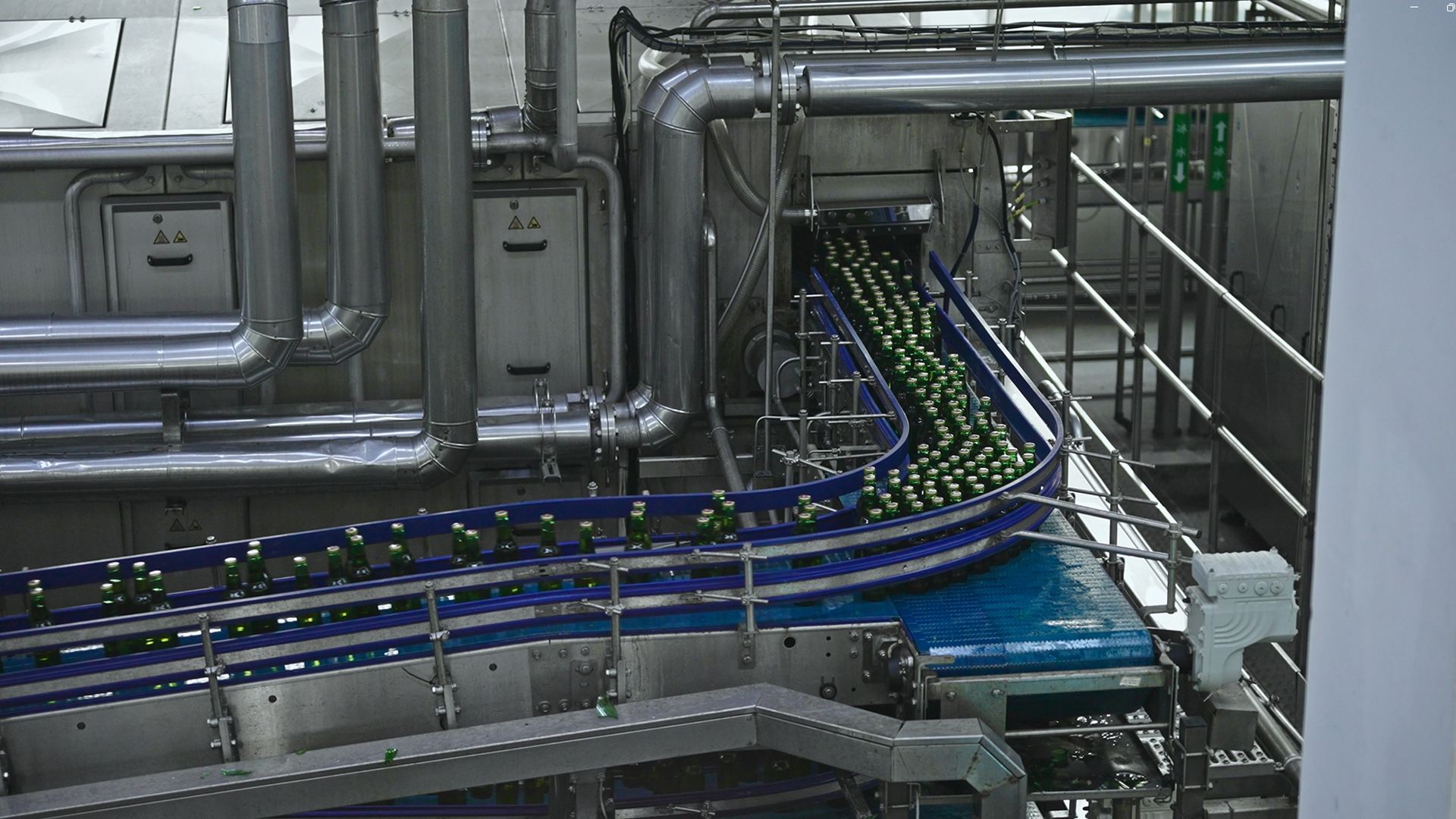
Beverage Production
Beverage production environments are defined by speed, synchronization, and volume. High-throughput lines run continuously, often at thousands of units per hour, where even minor mechanical deviations can cascade into line-wide disruptions.
It includes bottling and canning lines, breweries, soft drinks and water plants, and dairy beverage production.
The major maintenance constraints in these environments are:
- A high concentration of high-speed rotating assets, such as motors, pumps, blowers, and gearboxes
- Critical equipment, including fillers, cappers, labellers, conveyors, and packaging machines, all tightly interdependent
- Frequent CIP (Clean-In-Place) cycles and SIP (Sterilize-In-Place) cycles, resulting in assets’ exposure to repeated thermal shocks, moisture, and aggressive chemicals
- Extremely tight OEE, throughput, and quality targets, leaving little tolerance for unplanned stops
In this context, failures rarely stay localized. A bearing issue on a filler or a misalignment on a conveyor can quickly propagate downstream, affecting filling accuracy, closure integrity, labelling quality, and ultimately shipment schedules. Because maintenance windows are scarce and often aligned with cleaning cycles, early fault detection is essential to avoid emergency interventions.
Fresh & Chilled Food Processing
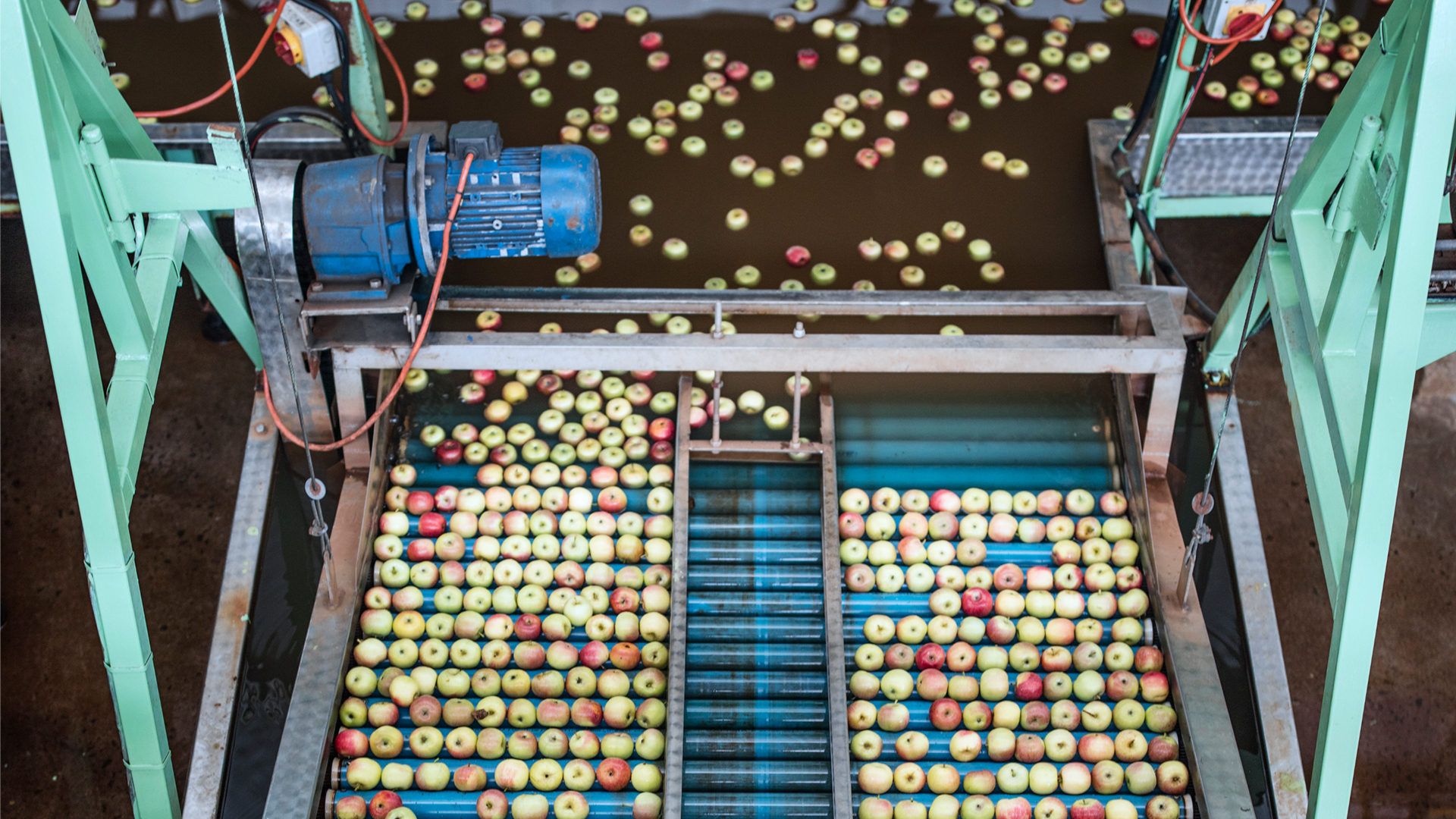
Fresh and chilled food processing environments are defined by temperature control, hygiene, and time sensitivity. Production often involves perishable raw materials and short shelf-life products, where equipment reliability directly affects food quality and the ability to prevent spoilage.
This category includes dairy products, fresh meat, poultry and seafood, fresh-cut fruits and vegetables, and ready-to-eat chilled meals.
The major maintenance constraints in these environments are:
- Extensive reliance on cold-chain equipment, including refrigeration units, chillers, and conveyors operating near thermal limits
- Frequent washdowns and aggressive cleaning procedures, accelerating corrosion and moisture ingress
- Very short maintenance windows, often limited to brief production pauses or sanitation cycles
- Hygiene-driven design constraints that limit sensor placement and physical access to equipment
In these conditions, failures can escalate quickly. A refrigeration fault, bearing degradation, or seal failure may not only stop production but also compromise product quality or force the disposal of entire batches. Because interventions must be carefully coordinated with sanitation and quality procedures, early fault detection and non-intrusive monitoring are essential to avoid reactive maintenance and unplanned product losses.
Frozen Food Production
Frozen food production environments are defined by extreme operating conditions, energy intensity, and continuous refrigeration demand. Assets operate permanently at low temperatures, often under high mechanical load, where even small deviations can rapidly impact both uptime and product integrity. This category includes frozen vegetables, frozen meals, ice cream production, and frozen meat and seafood.
The major maintenance constraints in these environments are:
- Heavy reliance on refrigeration systems, including compressors, evaporators, condensers, and associated auxiliary equipment
- Bearings and mechanical components operating under low-temperature stress, increasing the risk of lubrication issues and premature wear
- Ice buildup and moisture ingress, leading to accelerated corrosion, reduce efficiency, and interfere with moving parts
- High energy consumption, making performance losses immediately visible in operating costs
In frozen food plants, failures often have a dual impact. A mechanical fault may stop production, while a refrigeration issue can threaten product temperature control and force costly disposal of inventory. Because these assets are both critical and energy-intensive, early detection of mechanical, lubrication, or thermal degradation is essential to prevent unplanned downtime, limit energy waste, and safeguard the cold chain.
Dry & Shelf-Stable Food Manufacturing
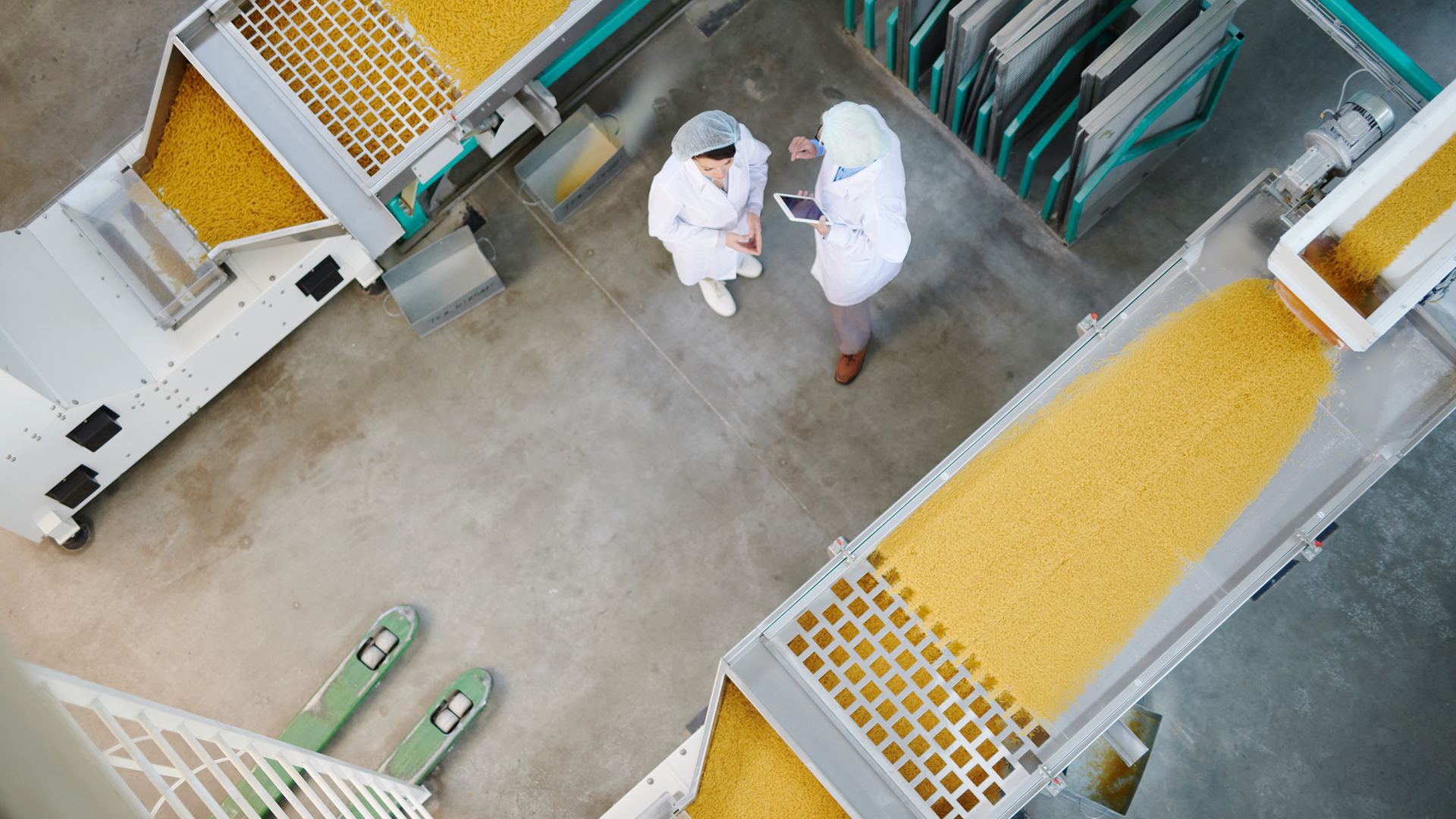
Dry and shelf-stable food manufacturing environments are defined by long production runs, thermal stress, and mechanical wear. Unlike chilled or frozen processes, these operations often prioritize throughput and continuity over frequent stops, which increases the impact of unexpected failures.
This category includes bakery and snack production, cereals and grain processing, powdered products, and canned or ambient foods.
The major maintenance constraints in these environments are:
- Extensive use of process equipment operating under continuous load, including ovens, dryers, mixers, and mills
- Dust generation, contributing to abrasive wear, contamination, and potential explosion risk
- Repeated heating and cooling cycles, resulting in thermal fatigue in baking, roasting, or drying processes
- Very long production campaigns, leaving limited opportunities for maintenance
In these conditions, degradation often develops gradually and remains unnoticed until it leads to sudden breakdowns, quality deviations, or safety incidents. Because stopping production can be highly disruptive and costly, early detection of mechanical wear, imbalance, or overheating is critical to maintaining stable output and reducing unplanned downtime.
What Are the Disproportionate Benefits of Predictive Maintenance for a Food & Beverage Plant?
Predictive Maintenance (PdM) delivers value in every asset-intensive industry. But in Food & Beverage (F&B), its benefits are disproportionately high, due to a unique combination of structural factors: continuous production, limited maintenance windows, strict hygiene requirements, and the high cost of unplanned stops. PdM helps reduce downtime not only by preventing failures, but by aligning maintenance actions with the operational realities of food production.
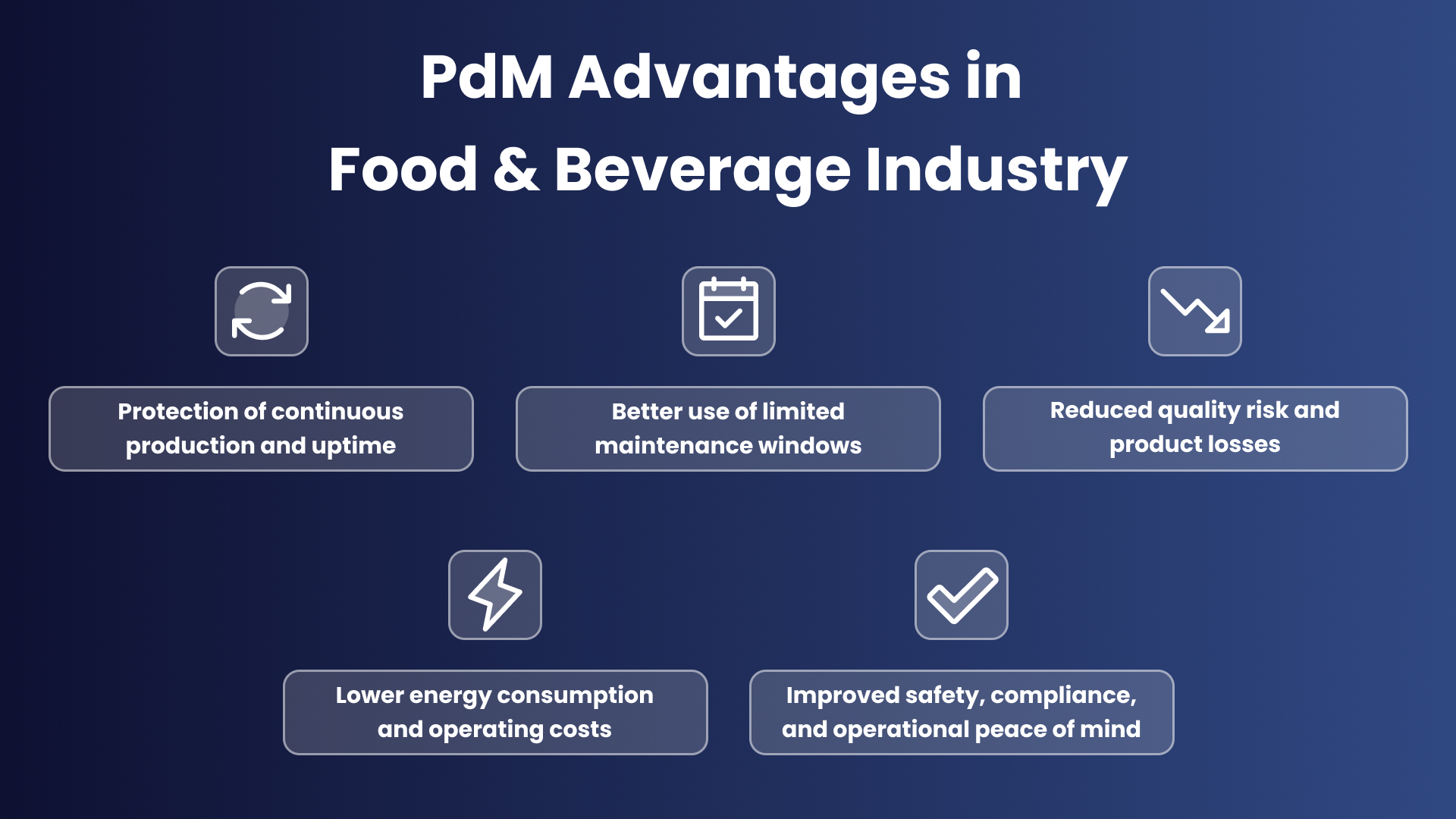
For F&B manufacturers, Predictive Maintenance delivers a set of benefits that go well beyond maintenance efficiency alone. PdM enables:
- Reduced exposure to unplanned downtime, supporting continuous production
- Better use of limited maintenance windows
- Reduced quality risk and product losses
- Reduced energy losses and operating costs
- Improved safety, compliance, and operational peace of mind
Want to Start Predicting Failures in Your Food & Beverage Plant?
I-care collects asset health data using a range of condition monitoring technologies, including its own Wi-care wireless sensors. This data is ingested and analyzed by I-see, I-care’s Predictive Maintenance software, not only to predict failures, but also to turn asset insights into clear maintenance priorities and actionable decisions across your plant.
Protecting Continuous Production and Uptime
In Food & Beverage plants, production lines operate as tightly synchronized systems. A single degrading component rarely fails in isolation. Mechanical issues on critical assets such as grinders, fillers, or conveyors can quickly propagate across interconnected processes, disrupting downstream operations and forcing full-line stoppages.
Predictive Maintenance (PdM) creates value in this context by detecting early-stage degradation before it has a significant impact on the production flow. By identifying faults while equipment is still operating normally, PdM enables maintenance teams to intervene at a controlled moment, intercepting localized issues from cascading into widespread downtime.
What this means in practice:
- Local faults are contained before affecting the entire line
- Production flow remains stable on high-throughput, tightly synchronized assets
- Unplanned downtime is avoided without disrupting sanitation or delivery schedules
Real-World Example
At Barry Callebaut, early detection of bearing degradation on critical cocoa grinders enabled maintenance teams to maintain the equipment until a scheduled technical stop. By intervening before failure, the site avoided dozens of hours of unplanned downtime on assets located at the heart of a tightly synchronized production flow, where even a short disruption would have impacted multiple downstream processes.
Discover Barry Callebaut’s success story with Predictive Maintenance

Making the Most of Limited Maintenance Windows
In Food & Beverage plants, maintenance is rarely performed when it is technically convenient. Interventions are constrained by sanitation cycles, production campaigns, and regulatory requirements. When failures occur unexpectedly, maintenance teams are forced to intervene outside planned windows, often triggering additional cleaning, revalidation, and production losses.
Predictive Maintenance (PdM) creates value by shifting maintenance from reactive execution to prepared intervention. By detecting early faults, PdM provides the lead time needed to diagnose the issue, assess severity, prepare spare parts, and plan resources before access becomes available. This readiness ensures that when a maintenance window opens, interventions are precise, efficient, and limited in scope.
What this means in practice:
- Maintenance work is executed during planned windows, not forced by breakdowns
- Interventions are shorter, better prepared, and less disruptive
- Coordination between maintenance, production, and sanitation improves
Real-World Example
At Lutosa, the transition toward continuous frozen-food production made weekend breakdowns particularly costly. By applying predictive vibration monitoring, early mechanical degradation was detected in advance, allowing actions to be scheduled during planned maintenance windows. This reduced emergency call-outs and restored operational stability without disrupting production or sanitation routines.
Discover Lutosa’s success story with Predictive Maintenance
Reducing Quality Risk and Product Losses
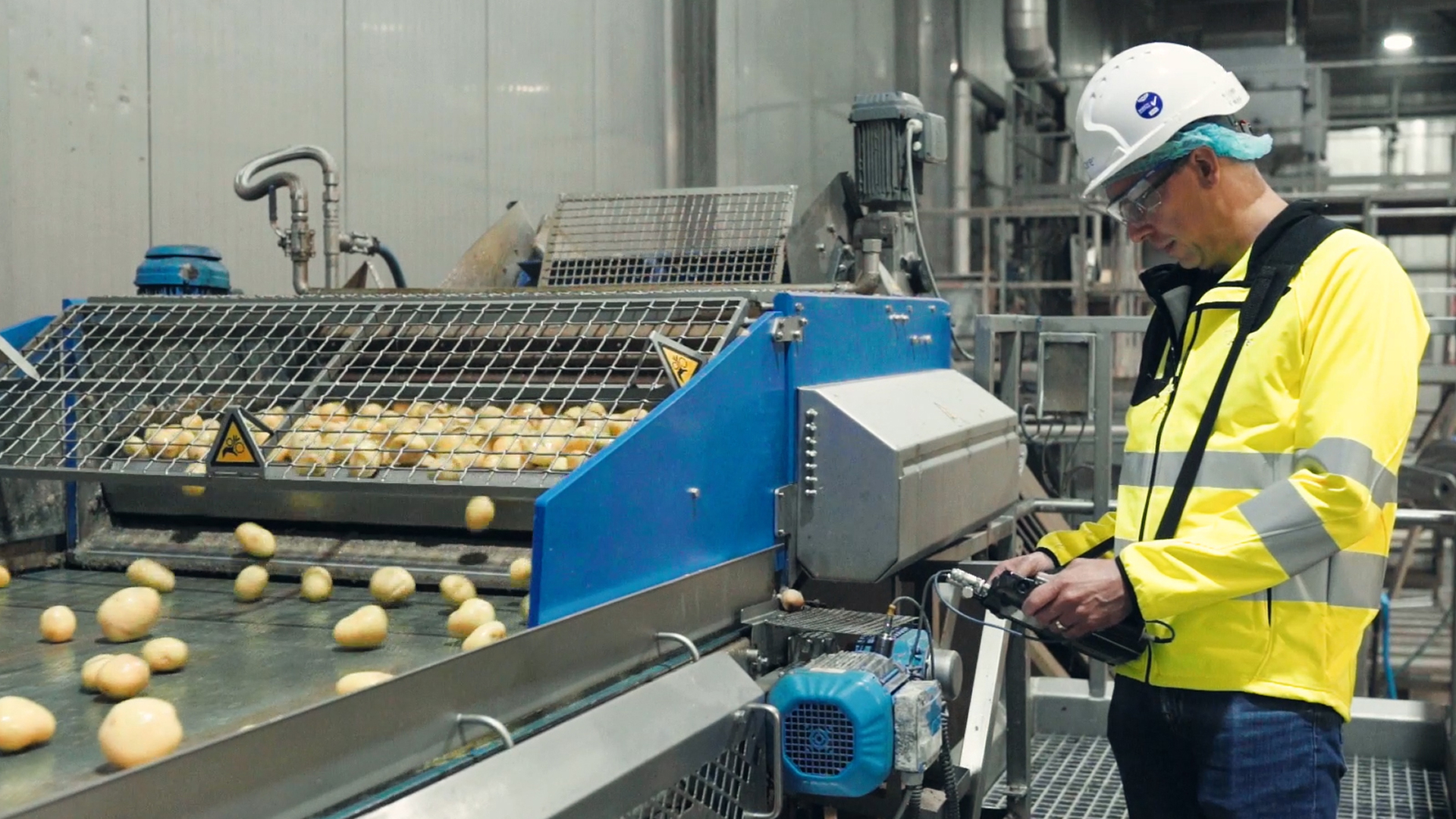
In Food & Beverage operations, quality losses are often irreversible. Once a product is overcooked, underfilled, improperly sealed, or exposed to temperature deviation, it cannot be reworked without compromising quality or compliance. As a result, even small deviations can immediately erode first-pass yield (FPY).
Predictive Maintenance (PdM) creates value by detecting asset-related process drift before it translates into off-spec product. Early mechanical and electrical degradation, such as misalignment, wear, or unstable motor behavior, acts as leading indicators long before quality deviations trigger alarms or final inspections. By identifying these deviations at the asset level, PdM enables actions before asset-related defects propagate into the finished product.
What this means in practice:
- First-pass yield is protected by maintaining stable process conditions
- Scrap and rework caused by gradual drift are reduced
- Quality performance improves without increasing inspection effort
Real-World Example
On high-speed processing and packaging lines, early detection of mechanical wear or misalignment prevents gradual drift that would otherwise reduce first-pass yield and only be detected during final inspection, when entire batches may already be lost.
Lowering Energy Consumption and Operating Costs
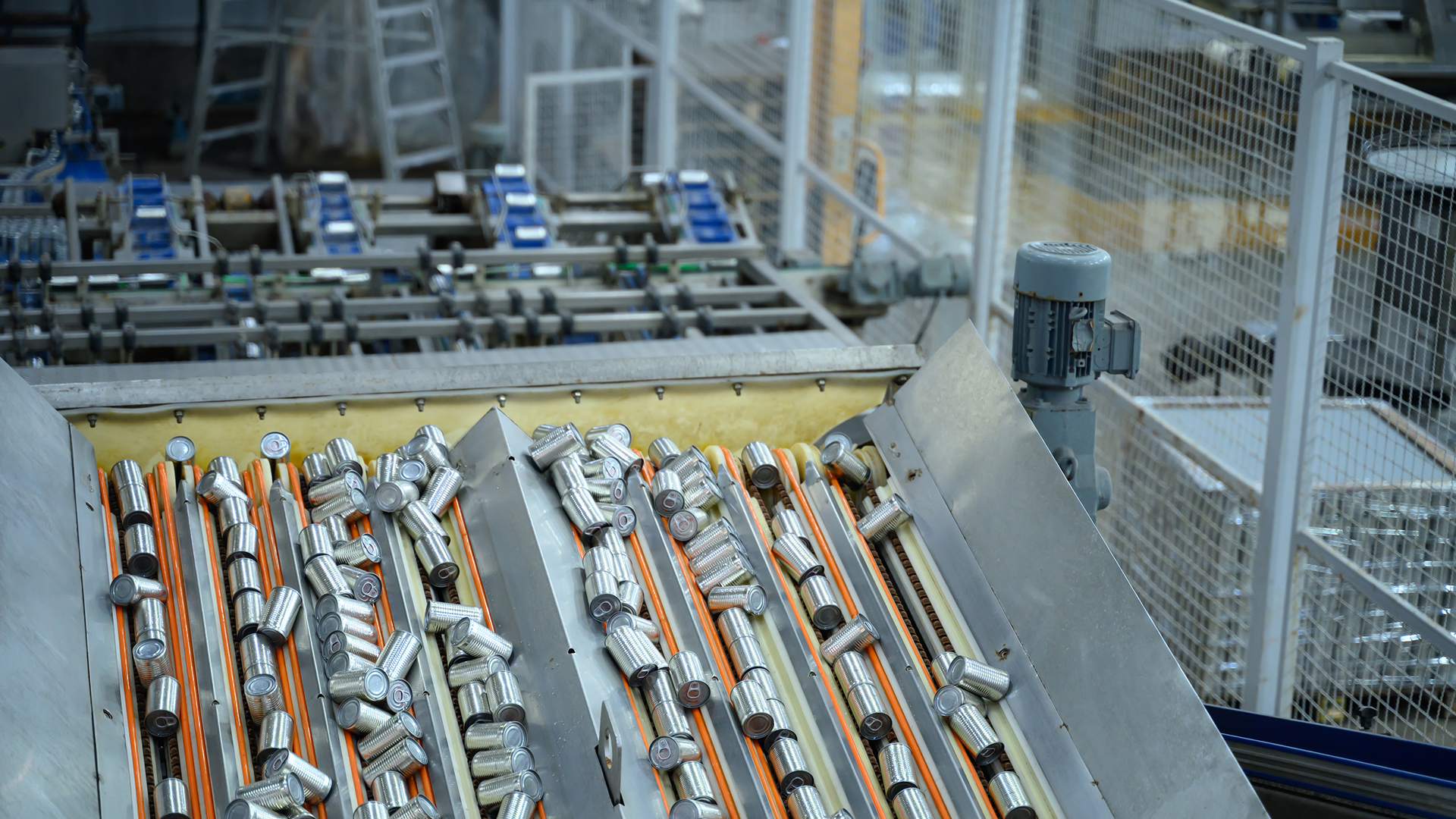
Food & Beverage plants operate energy-intensive systems that run continuously, including compressors, refrigeration units, pumps, ovens, dryers, and utilities. When mechanical degradation, leaks, or imbalance occur, assets often continue to operate while consuming more energy. These losses rarely trigger alarms or production stops, but they silently increase operating costs over time.
Predictive Maintenance (PdM) creates value by making continuous efficiency losses visible, enabling targeted actions that can reduce energy consumption when addressed. Techniques such as vibration analysis, ultrasound, and infrared thermography detect early inefficiencies, compressed air leaks, steam losses, friction, or abnormal loading, while equipment remains in service. By identifying these issues early, PdM allows plants to address inefficiencies before they become structural cost drivers.
What this means in practice:
- Energy waste caused by degradation and leaks is detected early
- Utilities operate closer to their optimal efficiency point
- Operating costs can be reduced when identified inefficiencies are addressed, without sacrificing uptime or quality
Real-World Example
At Royal Cosun, systematic condition monitoring of utilities and electrical installations revealed hidden inefficiencies in compressed air and energy distribution systems. Addressing these issues reduced energy consumption, improved asset efficiency, and delivered measurable cost savings without affecting production continuity.
Discover Royal Cosun’s success story with Predictive Maintenance
Supporting Safety, Compliance, and Peace of Mind
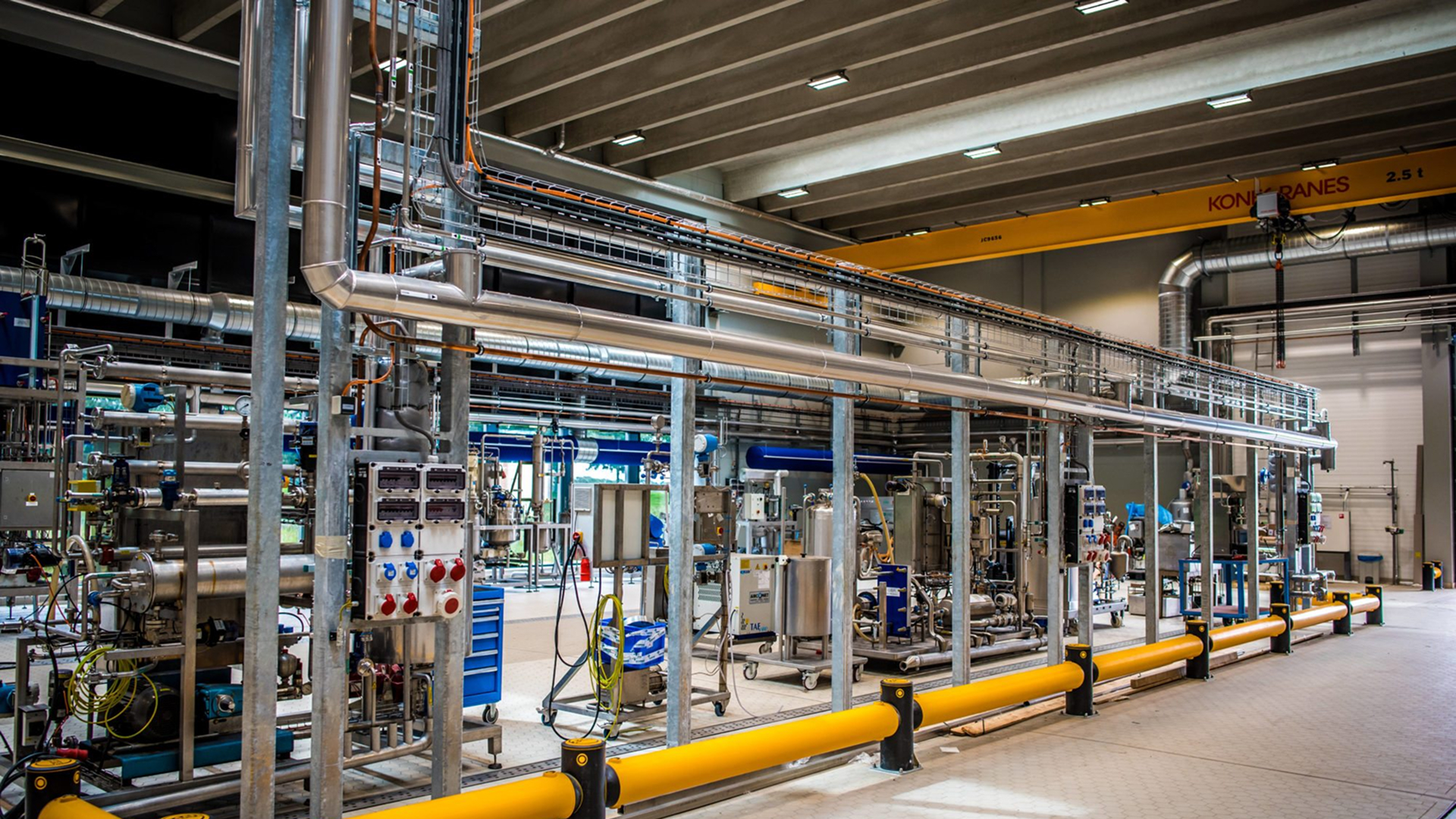
Food & Beverage plants operate under strict regulatory and insurance scrutiny, often exceeding that of many other industrial industries. Electrical faults, overheating, mechanical degradation, or abnormal operating conditions may not immediately affect production, but they can evolve into safety incidents, fires, or non-compliance findings with severe operational and financial consequences.
Predictive Maintenance (PdM) creates disproportionate value by shifting risk detection upstream. By continuously monitoring asset condition, PdM identifies abnormal thermal, electrical, or mechanical behavior long before it reaches a critical threshold. This allows actions to be taken, reducing the likelihood of incidents and providing objective evidence that risks are being actively managed.
What this means in practice:
- Safety risks are identified and mitigated before incidents occur
- Compliance efforts are supported by documented, repeatable inspections
- Maintenance and management teams gain confidence and operational peace of mind
Real-World Example
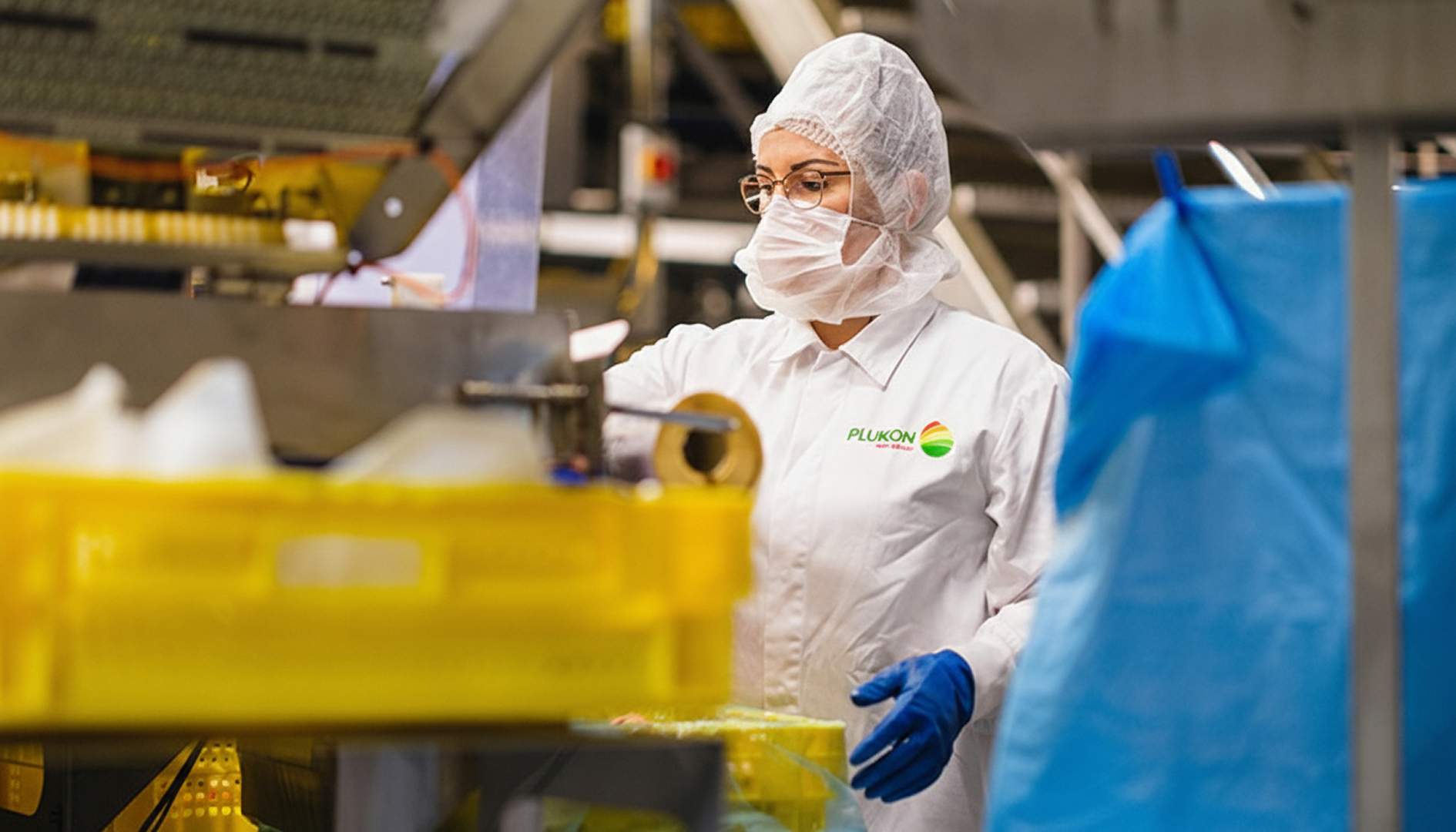
At Plukon Food Group, standardized thermographic inspections combined with centralized reporting provided clear visibility into electrical risks across multiple sites. This proactive approach reduced incidents, improved uptime, and strengthened the company’s position with insurers by demonstrating structured and traceable risk management practices.
Discover Plukon’s success story with Predictive Maintenance
Which PdM Technologies to Choose to Monitor Food & Beverage Assets?
Choosing the right Predictive Maintenance (PdM) technologies in Food & Beverage (F&B) starts with asset criticality and failure risk, not with tools.
The most suitable technique depends on:
- How an asset fails (mechanical, electrical, thermal, or lubrication-related)
- Where it operates (washdown zones, cold environments, hygienic areas)
- How production runs (batch or continuous)
As a result, effective PdM programs combine complementary approaches, ranging from sensor technologies to electrical, analytical, and laboratory-based methods, applied selectively rather than through a one-size-fits-all approach.
In practice, F&B manufacturers typically rely on a combination of core Predictive Maintenance techniques, complemented by specialized diagnostic tools, including:
- Vibration Analysis, to detect mechanical issues such as imbalance, misalignment, bearing defects, and gear wear on rotating equipment
- Ultrasound Analysis, to identify compressed air and gas leaks, steam trap failures, and electrical discharges
- Infrared Thermography, to detect overheating in electrical installations, motors, and process equipment without physical contact
- Oil Analysis, to monitor lubricant condition, contamination, and internal wear in gearboxes, compressors, and other oil-lubricated assets
- Electrical and Motor Circuit Analysis, to assess motor health, power quality, and electrical degradation
- Motion Magnification, to visualize subtle mechanical movements and structural vibration that are invisible to the naked eye
| Condition Monitoring Technique | Typical Assets Monitored | Failure Modes Detected | Why It’s Relevant in Food & Beverage | Typical Deployment |
| Vibration Analysis | Motors, pumps, fans, gearboxes, compressors, mixers, agitators | Imbalance, misalignment, bearing wear, looseness, gear defects | Backbone of PdM in F&B. Ideal for high-speed, continuous production assets | Route-based, wireless sensors, online monitoring |
| Ultrasound Monitoring | Compressed air & gas systems, steam traps, valves, slow-speed bearings, electrical switchgear | Leaks, friction, steam trap failures, electrical discharge | Critical for energy-intensive plants. Works well in noisy, wet, washdown environments | Handheld inspections, targeted monitoring |
| Infrared Thermography | Electrical panels & MCCs, motors, drives, ovens, dryers, refrigeration components | Overheating, loose connections, insulation defects, thermal imbalance | Non-contact and hygienic. Widely used for electrical fire prevention and safety | Periodic inspections, screening campaigns |
| Oil Analysis | Gearboxes, compressors, hydraulic systems, enclosed bearings | Internal wear, contamination, lubricant degradation | Detects failure modes invisible to surface sensors. supports food-grade lubricant control | Periodic sampling and lab analysis |
| Electrical & Motor Circuit Analysis | Motors, drives, power supply systems | Insulation degradation, phase imbalance, power quality issues | Early detection of electrical root causes in motor-dense, high-uptime plants | Offline tests, online electrical monitoring |
| Motion Magnification | Machine structures, frames, supports, complex assemblies | Structural resonance, looseness, abnormal vibration behavior | Non-contact, expert-level diagnostic tool for complex or unexplained issues | Targeted investigations |
Not Sure Which Pdm Technologies to Use?
At I-care, our experts help you assess asset criticality, operating conditions, and failure risks to define a Predictive Maintenance strategy tailored to your Food & Beverage plant.
Vibration Analysis
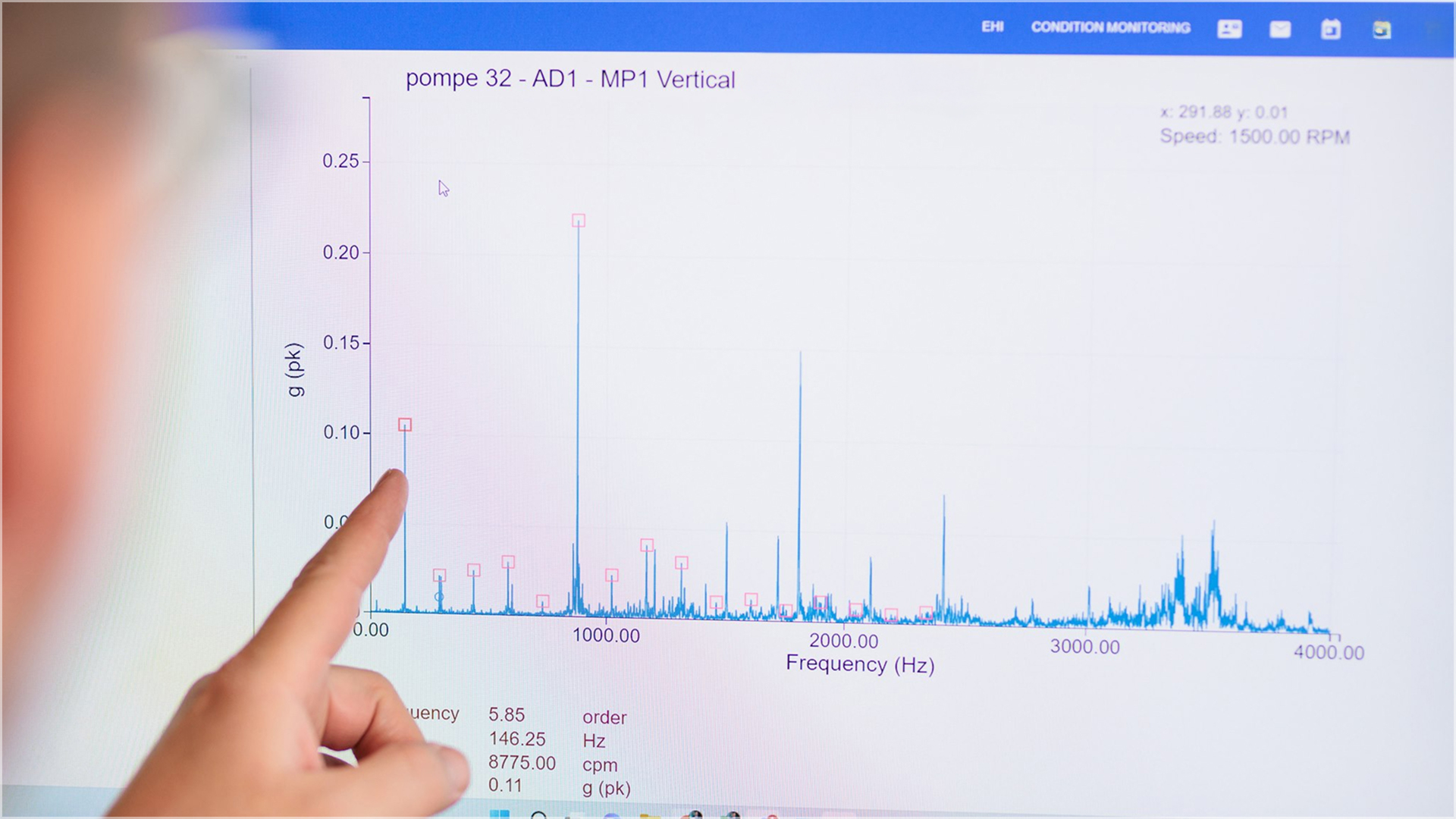
Vibration Analysis is primarily applied to rotating equipment that is critical to Food & Beverage production, including:
- Motors, pumps, and fans driving production and utility systems
- Gearboxes, often operating continuously under load
- Compressors, particularly in air and refrigeration systems
- Mixers and agitators, where mechanical stress and imbalance are common
These assets are often central to continuous or high-speed production processes.
Why does it fit Food & Beverage?
Vibration Analysis is particularly well-suited to Food & Beverage (F&B) environments because it enables early detection of mechanical degradation, such as imbalance, misalignment, bearing wear, or looseness, while equipment is still running normally. These fault types are among the most common root causes of unplanned downtime in F&B plants.
The technique performs well on high-speed lines and continuously operating equipment, where small mechanical deviations can escalate quickly and where stopping production for inspection is costly or impractical.
Vibration Analysis can be deployed through:
- Portable, route-based measurements for periodic monitoring
- Wireless sensors for assets that are difficult to access or exposed to washdown conditions
- Online monitoring systems for critical equipment requiring continuous visibility
This adaptability allows Food & Beverage plants to match monitoring intensity to asset criticality and production constraints without disrupting operations.
Because it delivers reliable diagnostics on the most common mechanical failure modes and supports both route-based and continuous monitoring strategies, Vibration Analysis often forms the foundation of Predictive Maintenance programs in Food & Beverage plants, complemented by other techniques to address electrical, thermal, or process-related risks.
Real-World Example
At Barry Callebaut, vibration monitoring on critical cocoa grinders enabled early detection of bearing degradation. Maintenance teams were able to intervene during scheduled technical stops, avoiding unplanned downtime on assets central to production flow and preventing disruptions across tightly synchronized processes.
Ultrasound Analysis
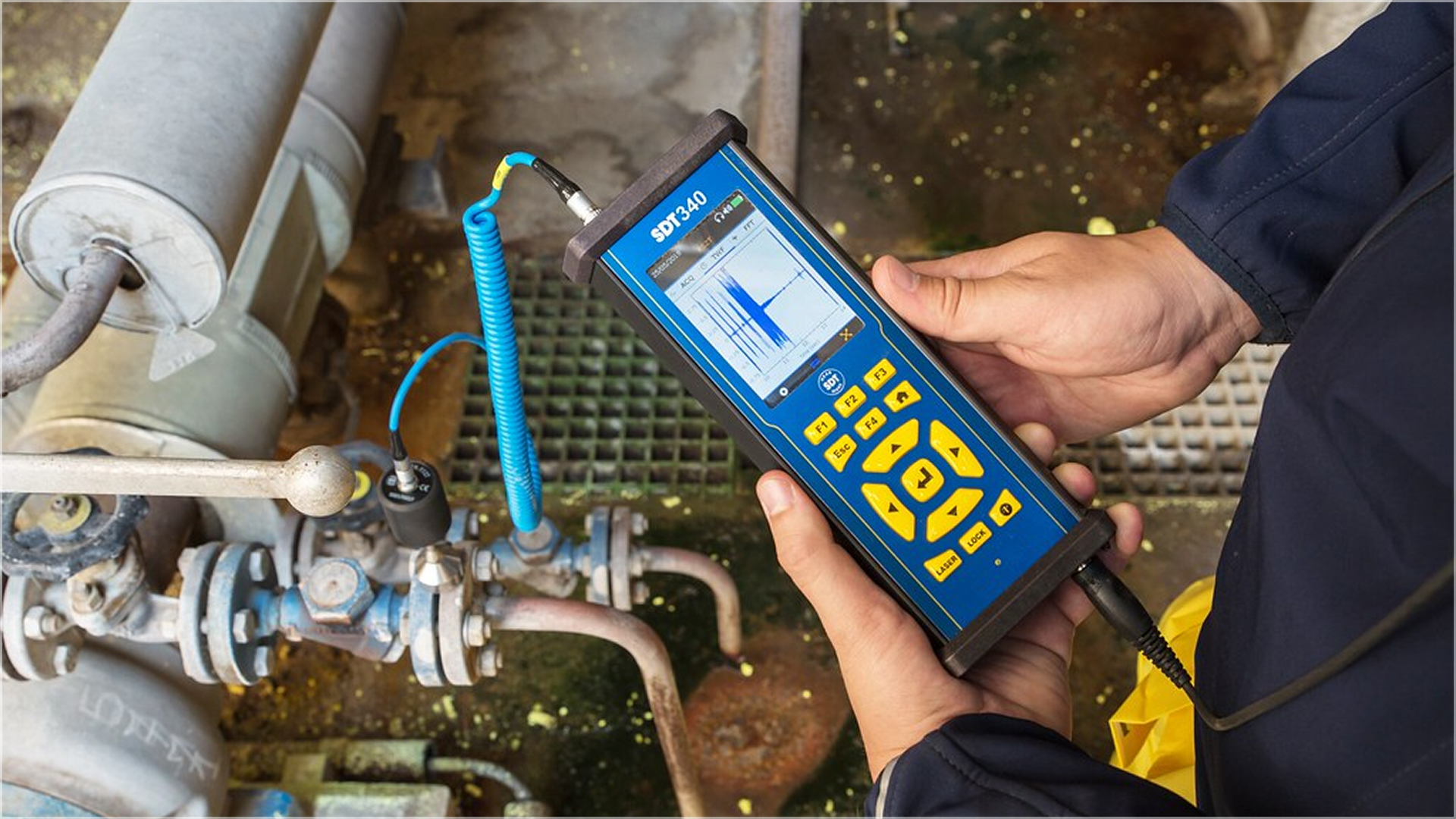
Ultrasound Analysis is primarily applied to assets and systems that generate high-frequency acoustic emissions, including:
- Compressed air and gas systems, where leaks are a major source of energy loss
- Steam traps and steam distribution systems, critical in thermal processes
- Valves, particularly those subject to wear, leakage, or improper sealing
- Bearings, especially slow-speed or intermittently loaded bearings
- Electrical switchgear, where partial discharge, arcing, or corona can be detected
These assets are common, particularly in utilities, energy distribution, and supporting infrastructure that directly impact production efficiency and operating costs.
Why does it fit Food & Beverage?
Ultrasound Analysis is particularly well-suited to Food & Beverage (F&B) environments because it excels at detecting leaks, friction, and electrical discharge in conditions where other techniques may be less effective.
F&B plants are highly energy-intensive, with extensive compressed air and steam networks. Even small leaks can result in significant and continuous energy losses, often remaining unnoticed because they do not immediately affect production output. Ultrasound enables early identification of these inefficiencies while systems remain in operation.
The technique also performs well in noisy, wet, or washdown environments, where vibration or visual inspection may be limited. Because ultrasound sensors focus on high-frequency sound outside the audible range, they remain effective even in production areas with high ambient noise.
In addition, Ultrasound Monitoring complements vibration analysis by covering assets that are:
- Difficult to instrument with vibration sensors
- Operating at very low speeds
- Part of utility or auxiliary systems rather than core production machinery
This makes ultrasound a valuable tool for expanding Predictive Maintenance coverage beyond rotating production equipment.
Real-World Example
At Royal Cosun, ultrasound inspections were used as part of a broader proactive maintenance and risk-management program to identify compressed air and steam leaks across multiple Food & Beverage sites. By detecting and resolving these leaks early, the company reduced energy waste, improved utility efficiency, and extended the lifespan of critical equipment such as compressors, while increasing overall plant uptime.
Infrared Thermography
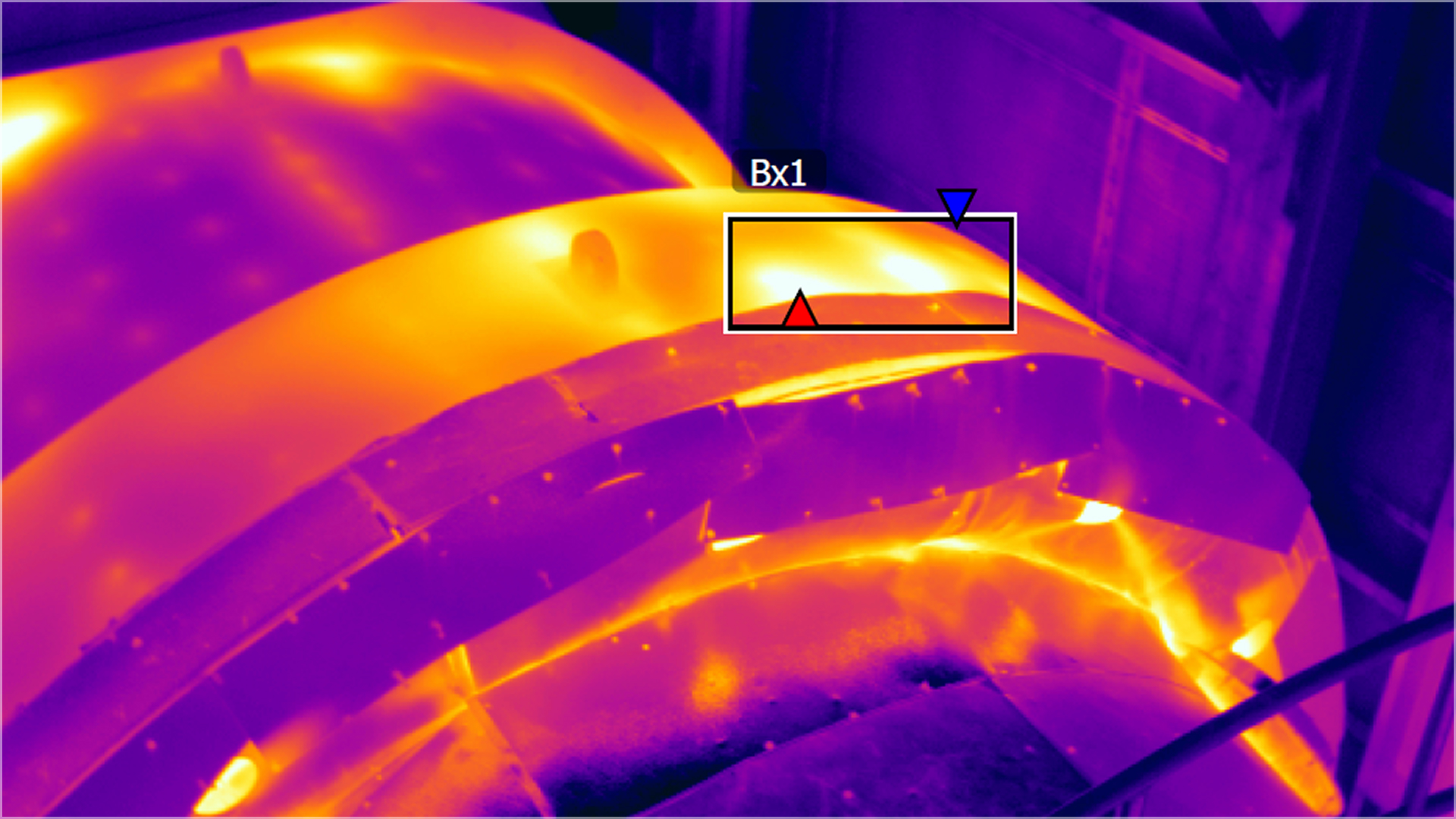
Infrared Thermography is primarily applied to assets and systems where abnormal heat is an early indicator of failure, including:
- Electrical panels, switchgear, and MCCs, where loose connections or overloads can lead to overheating
- Motors and drives, particularly those operating under variable load
- Ovens, dryers, and furnaces, common in thermal processing environments
- Refrigeration components, such as compressors, condensers, and electrical cabinets
These assets are often associated with safety risks, energy losses, or production interruptions when degradation goes undetected.
Why does it fit Food & Beverage?
Infrared Thermography is particularly well-suited to Food & Beverage (F&B) environments because it is a non-contact and non-intrusive inspection technique. This makes it fully compatible with hygiene and food safety requirements, as inspections can be carried out without touching equipment or disrupting production.
The technique is especially effective for electrical fire prevention, a critical concern in F&B plants where insurers and regulators place strong emphasis on electrical safety. By identifying abnormal temperature rises early, thermography allows actions to be taken before failures escalate into incidents or unplanned downtime.
Infrared Thermography is also valuable in cold and thermal processing environments. In frozen food plants, it helps detect insulation defects, abnormal heat generation, or electrical issues in refrigeration systems. In bakeries or drying processes, it supports the monitoring of ovens and heaters to ensure stable and efficient operation.
Because it can be deployed during normal operation and across large areas quickly, Infrared Thermography is often used as a preventive and predictive screening tool, complementing other condition monitoring techniques.
Real-World Example
At Plukon Food Group, standardized thermographic inspections were deployed across multiple Food & Beverage sites to assess the condition of electrical installations. By centralizing thermographic data and applying a uniform inspection methodology, Plukon improved visibility into electrical risks, reduced incidents, increased uptime, and strengthened its position with insurers by demonstrating a proactive and transparent approach to electrical safety management.
Oil Analysis
Oil Analysis is primarily applied to oil-lubricated assets where internal wear or lubricant degradation cannot be detected from the outside, including:
- Gearboxes, often operating under continuous load
- Compressors, particularly in refrigeration and utility systems
- Hydraulic systems used in processing or packaging equipment
- Large enclosed bearings, where visual or vibration access is limited
These assets are often critical to production continuity, energy efficiency, and asset longevity.

Why does it fit Food & Beverage?
Oil Analysis fits Food & Beverage (F&B) environments because it detects wear mechanisms and contamination that surface-based techniques cannot see. Analyzing lubricant condition, particles, and chemical properties provides early insight into internal degradation such as wear, corrosion, or lubricant breakdown.
This makes Oil Analysis particularly valuable for:
- Sealed or slow-speed assets, where vibration signatures may be weak
- Critical compressors and gearboxes, where failures are costly and often catastrophic
- Lubrication-intensive environments, where lubricant health directly affects asset reliability
In F&B plants, Oil Analysis also supports the monitoring of food-grade lubricants, helping ensure that lubrication practices remain both effective and compliant with hygiene and safety requirements.
Because samples can be taken without stopping equipment, Oil Analysis enables condition monitoring without disrupting production, making it well-suited to continuous or high-uptime operations.
Real-World Example
At a global Food & Beverage industry leader, Predictive Maintenance programs were expanded beyond vibration monitoring to include reliability-centered lubrication practices across multiple sites. By improving lubricant management and condition monitoring on critical assets, the company extended equipment life, reduced failure risk, and supported consistent reliability standards across its global operations.
Electrical & Motor Circuit Analysis
Electrical and Motor Circuit Analysis is primarily applied to motor-driven and electrically supplied assets that are critical to Food & Beverage operations, including:
- Electric motors, driving production and utility equipment
- Variable frequency drives (VFDs) and motor control systems
- Power supply systems, including panels, feeders, and connections
These assets are ubiquitous in Food & Beverage plants, where production relies on a high density of motors operating continuously under varying loads.
Why does it fit Food & Beverage?
Electrical & Motor Circuit Analysis fits Food & Beverage environments because it enables early detection of electrical degradation that mechanical monitoring alone cannot reveal. This includes insulation deterioration, phase imbalance, power quality issues, and abnormal electrical stress that can ultimately lead to motor failure or unplanned downtime.
In motor-dense plants operating under tight uptime constraints, electrical faults often develop before mechanical symptoms become visible. Electrical monitoring, therefore, complements vibration analysis by identifying root causes linked to the power supply or motor condition itself, rather than the mechanical consequences downstream.
This technique is particularly relevant in Food & Beverage plants because:
- Motors are exposed to humidity, washdowns, and thermal cycling, which accelerate insulation aging
- Variable loads and frequent starts place additional stress on electrical components
- Unplanned motor failures can rapidly stop entire production lines
By detecting electrical anomalies early, maintenance teams can intervene before faults escalate into breakdowns that disrupt continuous production.
Real-World Example
At Royal Cosun, electrical condition monitoring and inspections were deployed across multiple Food & Beverage sites as part of a structured, proactive risk-management program. By identifying electrical degradation and fire risks early, particularly within electrical cabinets, the company improved operational safety, increased uptime, and strengthened compliance and insurability across its global operations.
Motion Magnification
Motion Magnification is primarily applied to assets and structures where very small mechanical movements or vibrations are difficult to detect with conventional sensors, including:
- Structural elements, such as frames, supports, and machine bases
- Large or complex assemblies, where vibration behavior is difficult to interpret
- Inaccessible or hazardous areas, where installing sensors is impractical
- Equipment exhibiting unexplained vibration or resonance, despite normal sensor readings
Rather than relying on contact sensors, Motion Magnification amplifies subtle movements captured by video, making otherwise invisible motion patterns visible and measurable.

Why does it fit Food & Beverage?
Motion Magnification fits Food & Beverage (F&B) environments as a complementary diagnostic and troubleshooting technique, particularly when conventional condition monitoring methods do not provide clear answers.
F&B plants often operate complex production lines where multiple machines, structures, and foundations interact. In such environments, issues like structural resonance, looseness, or transmission of vibration between machines can be difficult to diagnose using vibration or ultrasound data alone. Motion Magnification helps visualize how equipment and structures move in real operating conditions, providing valuable insight into the source of abnormal behavior.
The technique is also well-suited to hygienic and constrained environments, as it is:
- Non-contact, with no sensors attached to equipment
- Deployable without stopping production
- Useful in areas where washdowns, temperature, or access limitations restrict sensor installation
Because Motion Magnification is typically used for targeted investigations rather than continuous monitoring, it is most effective when applied by experienced analysts to support root-cause analysis, validate suspected issues, or guide actions.
In Food & Beverage Predictive Maintenance programs, Motion Magnification is therefore positioned as an expert-level, complementary tool, enhancing understanding of complex mechanical behaviour rather than replacing core monitoring techniques such as vibration or ultrasound.
IIoT Sensors and a PdM software
Condition monitoring techniques create value in Food & Beverage plants. But when they are scaled, connected, and operationalized through IIoT sensors (e.g., Wi-care sensor) and a Predictive Maintenance platform (e.g., I-see software), they enable real-time monitoring and dramatically increase value, moving from isolated insights to plant-wide, actionable intelligence.
Food & Beverage plants typically operate hundreds or thousands of assets across production, utilities, refrigeration, and packaging. Relying solely on manual inspections or isolated measurements quickly becomes unmanageable. IIoT sensors enable real-time, automated data collection from assets, even in environments characterized by washdowns, humidity, cold temperatures, or restricted access.
But the value of Predictive Maintenance (PdM) does not come from sensors alone. It comes from how data is transformed into decisions, which is why sensors stream their data into a PdM platform.
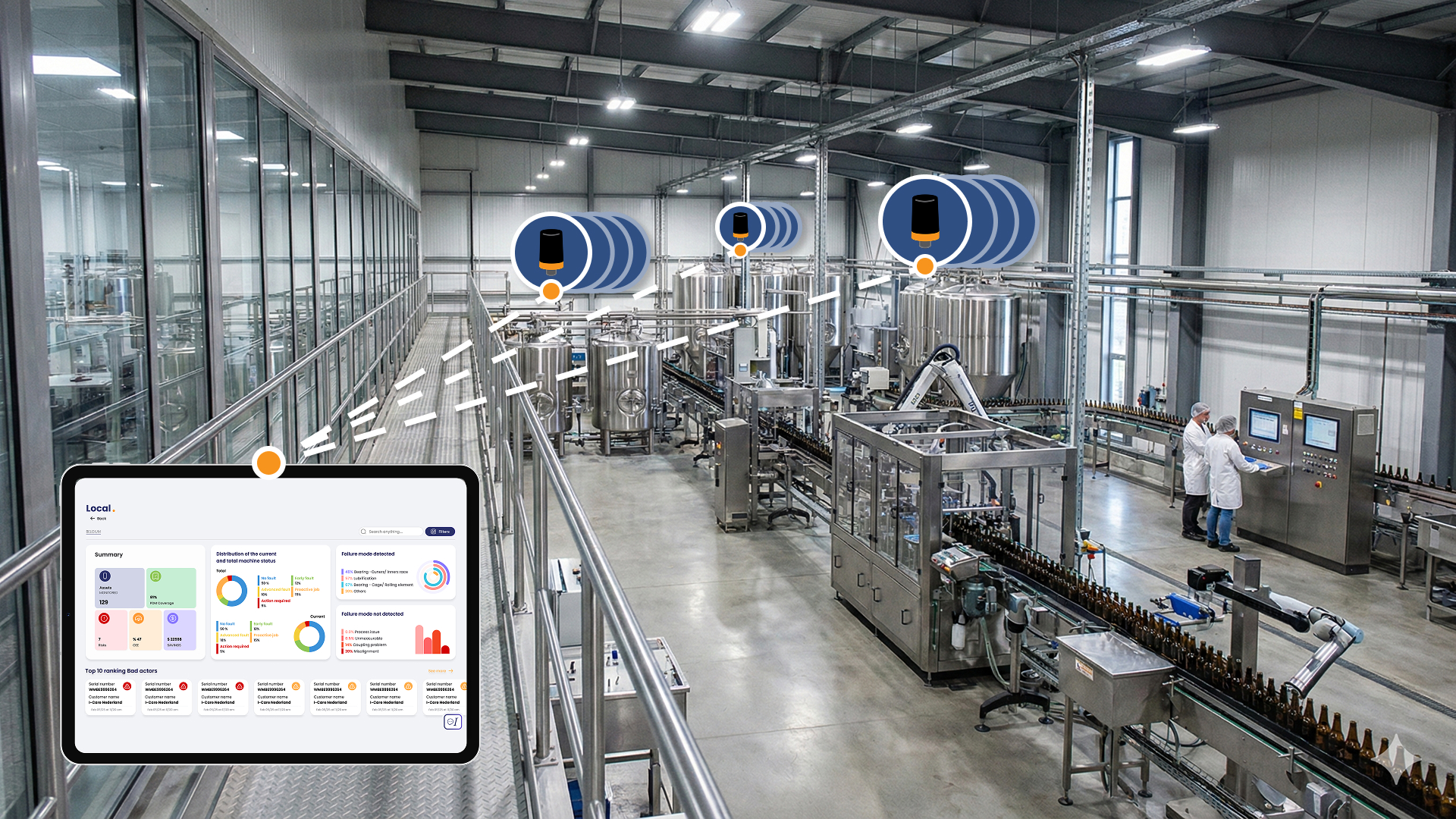
This platform plays a critical role by:
- Aggregating data from multiple condition monitoring technologies, regardless of data collector type or data source
- Normalizing and contextualizing measurements using asset metadata, operating conditions, and historical baselines
- Detecting anomalies and degradation trends that indicate emerging failures, using advanced analytics and machine learning models to support expert analysis by comparing historical and real-time asset data against established baselines and highlighting emerging risks
- Supporting risk prioritization based on asset criticality, potential production impact, and identified compliance-related exposure
- Transforming insights into actions, such as alerts, maintenance recommendations, or work orders
In Food & Beverage, this integration is particularly important because maintenance decisions must align with sanitation cycles, production schedules, and quality constraints.
IIoT sensors and a PdM software act as the connective tissue of a Predictive Maintenance strategy. They ensure that data collected at the asset level is transformed into clear, actionable intelligence at the plant level.
Curious How IIoT Sensors and a PdM Sensor Work Together at Plant Scale?
I-care combines its Wi-care wireless sensors, collecting vibration, impact, and temperature data, with the I-see Predictive Maintenance software to analyze asset health, connect multiple condition monitoring technologies, and integrate insights directly into maintenance workflows through links with platforms such as CMMS.
Building a Scalable Predictive Maintenance Strategy in Food & Beverage
Predictive Maintenance (PdM) does not necessarily start with full online monitoring across the entire plant. It can build progressively, based on operational maturity, asset criticality, and production constraints. Implementing predictive maintenance successfully in Food and Beverage industry requires a clear roadmap that translates strategy into actionable steps, aligned with production realities and organizational readiness
In practice, most Food & Beverage plants still evolve through clear and natural stages, but with a PdM software in place from the very beginning. Many start by monitoring a limited number of assets using portable inspections and a first set of sensors, with all collected data immediately centralized in a Predictive Maintenance platform. This allows early failure patterns to be identified, baselines to be built, and insights to be shared consistently across teams.
As value is demonstrated, monitoring is progressively extended to additional assets, while continuing to rely on the same platform to aggregate data, standardize analysis, and prioritize actions. Over time, Predictive Maintenance scales not by adding disconnected tools, but by expanding asset coverage on a unified PdM architecture across lines, utilities, and sites.tive tissue of a Predictive Maintenance strategy. They ensure that data collected at the asset level is transformed into clear, actionable intelligence at the plant level.
What About the Upfront Investment in a PdM Project?
The initial investment required to move from pilot projects to broader deployment can sometimes slow down decision-making. At I-care, this barrier can be reduced through instrument leasing models that convert traditional capital expenditure into operational expenditure, either via subscription-based approaches or hybrid CapEx–OpEx combinations. This flexibility allows Food & Beverage manufacturers to start small, scale progressively, and align investment with realized value, without committing to heavy upfront spending.
As Predictive Maintenance scales, its role also evolves. It is no longer just a technical maintenance tool, but a business enabler focused on improving reliability across production, utilities, and supporting infrastructure.
In Food & Beverage plants, PdM contributes directly to:
- Protection of margins, by reducing unplanned downtime, waste, and energy losses
- Reduction of operational risk, through early detection of mechanical, electrical, and process-related issues
- Reduction of asset-related risks that could impact food quality or compliance, by stabilizing critical equipment and lowering the likelihood of incidents
- Improvement of OEE and energy efficiency, by maintaining equipment in optimal operating conditions
Building a scalable Predictive Maintenance strategy, therefore, means tying together the diversity of Food & Beverage production environments, the disproportionate benefits PdM delivers in this industry, the complementarity of condition monitoring technologies, and a scalable IIoT and platform architecture that can grow with the plant.
Wherever You Are on This Journey, I-Care Helps You Take the Next Step
I-care supports Food & Beverage manufacturers at every stage of Predictive Maintenance, combining expertise, services, and solutions, from condition monitoring inspections and technology selection to wireless sensor deployment and PdM software implementation.