

Machinery Overview
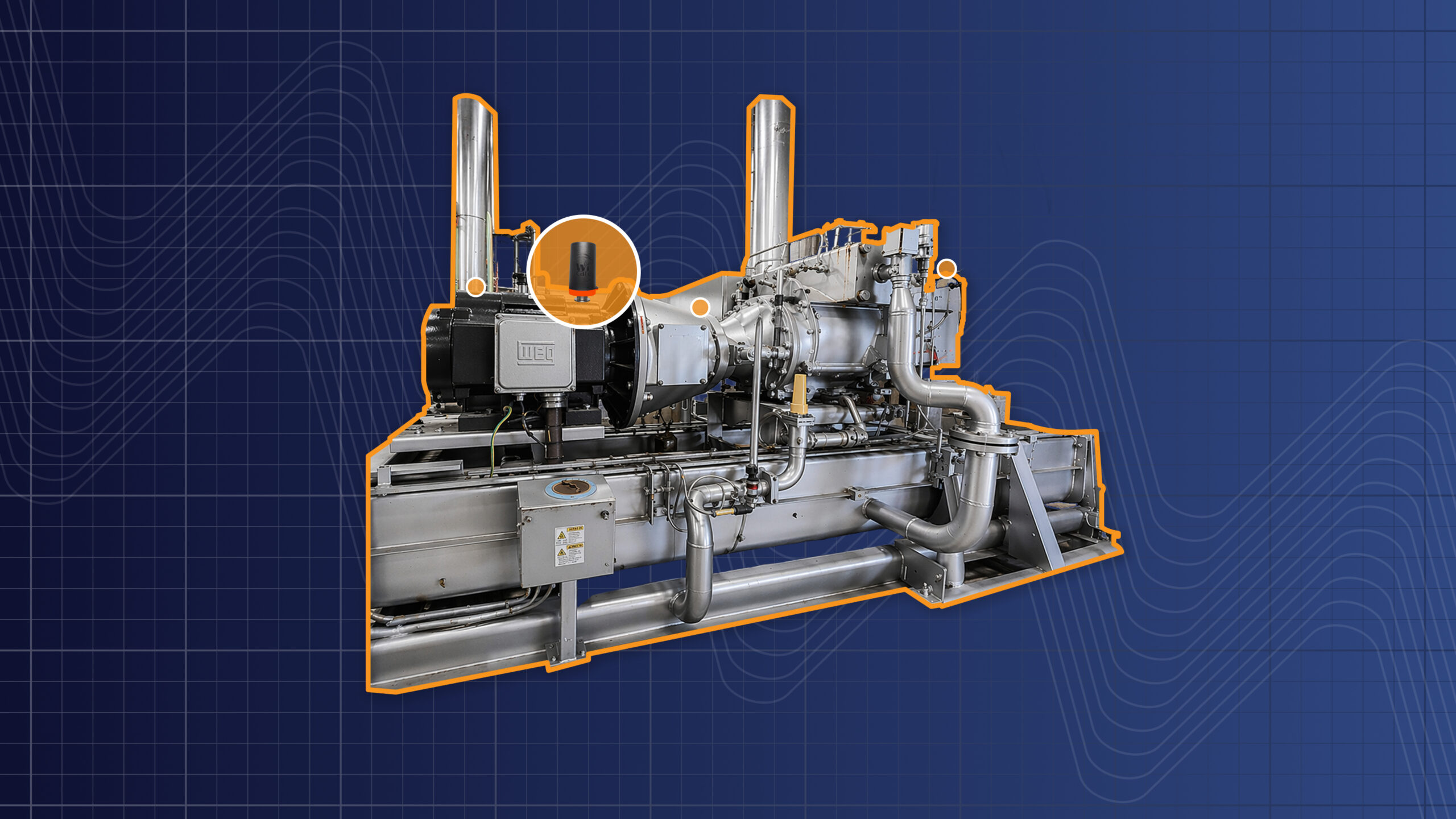
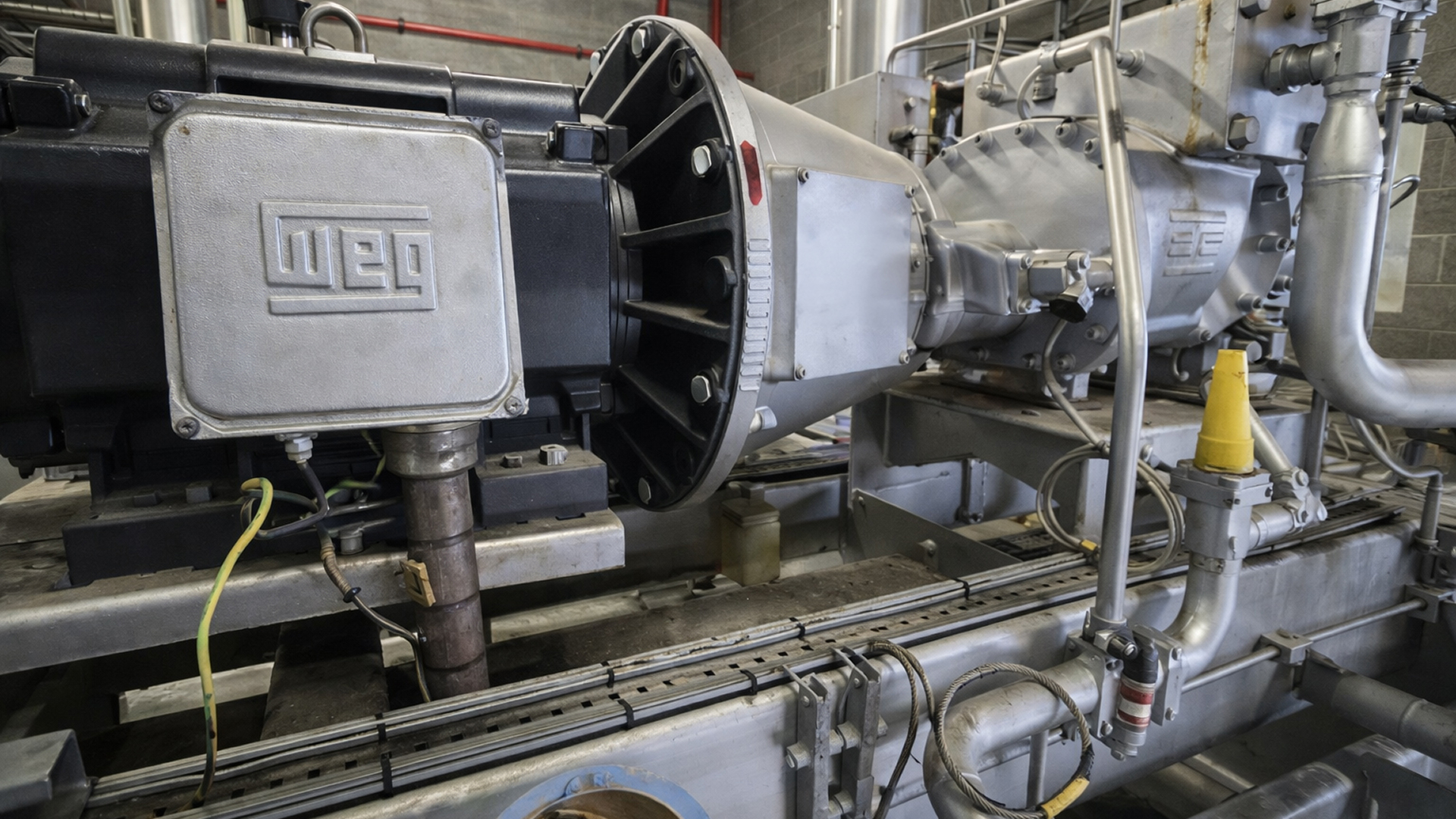
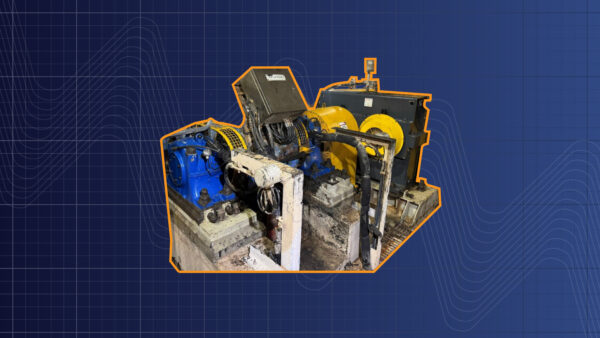
The monitored asset is a screw compressor used in a refrigeration system within a food ingredient production plant. In the Food & Beverage industry, refrigeration is a critical utility, meaning that any unexpected failure of the compressor could directly impact process continuity and product quality.
The compressor is driven by a 110 kW electric motor operating at variable speed, up to 2960 RPM. This configuration allows the system to adapt to fluctuating cooling demands while maintaining energy efficiency. However, the presence of a variable frequency drive (VFD) can introduce electrical phenomena that may affect bearing condition over time.
Given the critical role of refrigeration, any unexpected failure of the compressor motor could disrupt production and impact process continuity. Ensuring the reliability of this asset is therefore essential.
Monitoring Devices and Software Set-up
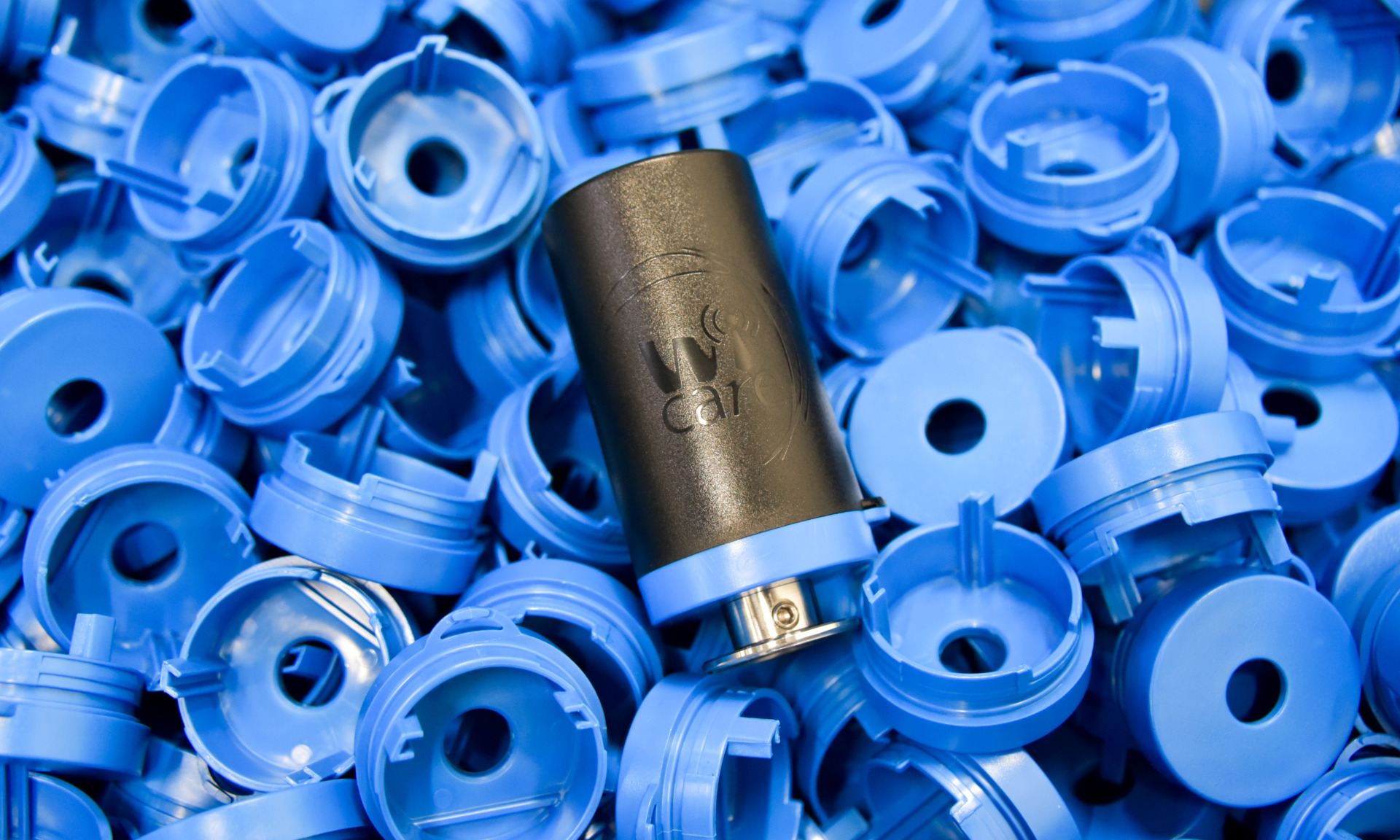
I-care reliability engineers installed Wi-care™ wireless vibration sensors across the asset. The setup included two sensors on the motor and two on the compressor, enabling continuous tracking of vibration behavior on both the driving and driven components.
These sensors continuously collected vibration and temperature data.
Standard vibration analysis was used as the primary method for monitoring the asset condition. In addition, the I-DNA processing technique was applied to enhance the detection of specific high-frequency fault signatures that may indicate insufficient lubrication or early-stage bearing damage.
All data was automatically transmitted to I-see™, I-care’s AI-powered PdM software, where the signals were analyzed and alerts generated when deviations from normal operating conditions were detected.
I-care vibration analyst then reviewed the data to validate the alert, perform detailed spectral analysis, and provide recommendations based on the observed fault evolution.


Detailed Analysis
Step 1 | Issue Detection
The first indication of an issue appeared on December 24, when the I-see™ dashboard flagged abnormal behavior on several motor measurement points.
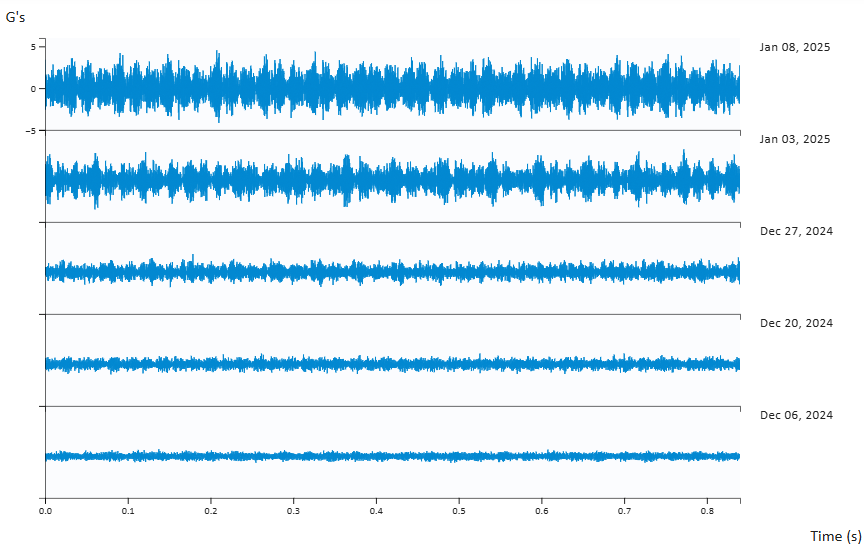
A closer examination of the data revealed a rise in impact-related vibration energy in the higher frequency range, suggesting the presence of localized defects within the component.
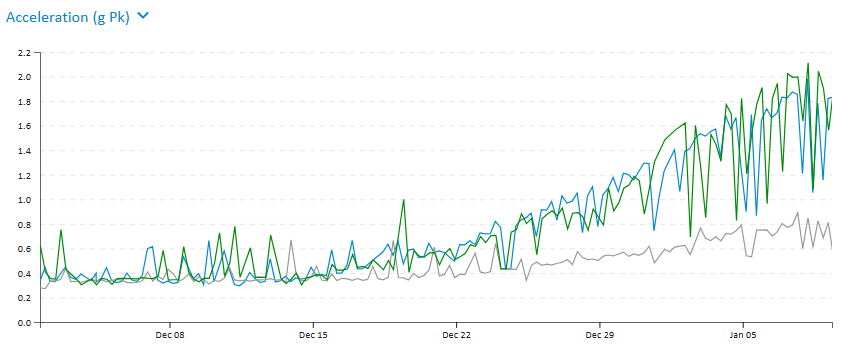
This abnormal evolution prompted a detailed analysis by an I-care vibration specialist
Step 2 | Analysis
The vibration data was further analyzed to understand the origin of the anomaly.
Spectral analysis (FFT) of the vibration signal revealed a distinct harmonic family at 3.08x running speed.
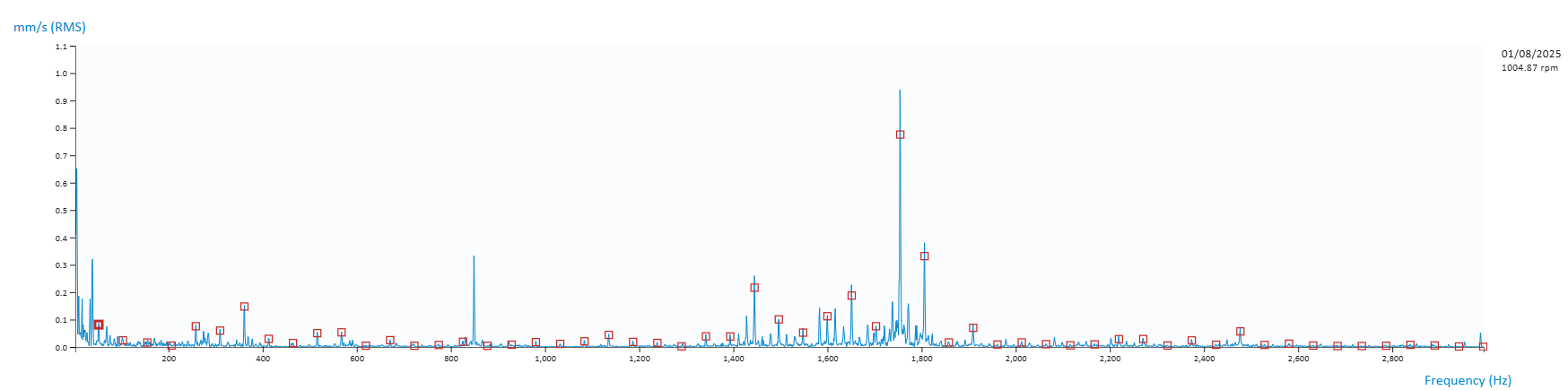
This frequency matched the theoretical Ball Pass Frequency Outer race (BPFO) of the motor bearing (SKF 6314). The presence of a harmonic at this frequency, combined with the observed increase in impact levels, is characteristic of an outer race defect, allowing the I-care vibration analyst to identify the fault.
Trend evolution over the following weeks confirmed a steady increase in impact levels, indicating a progressing defect.
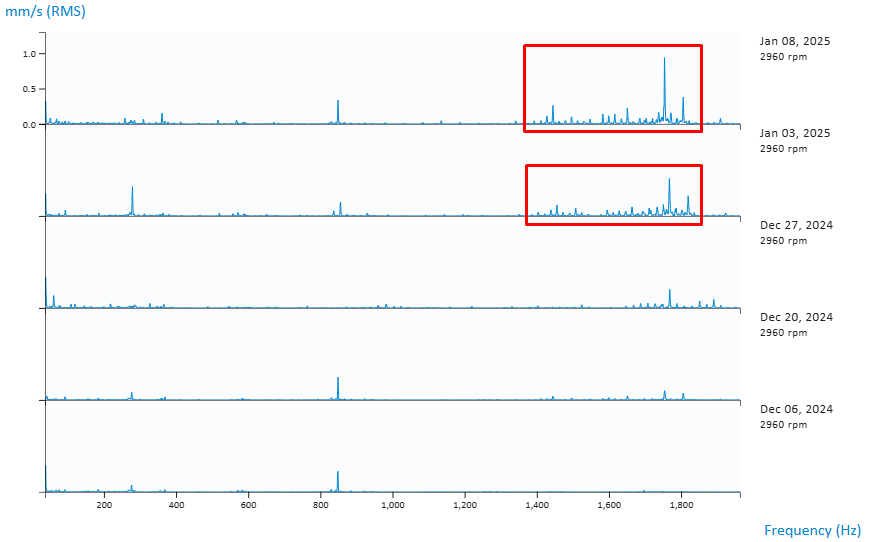
The consistency between the frequency match and the observed trend evolution provided a high level of confidence in the diagnosis.
Step 3 | Recommendation
Based on the identified outer race defect and its progression, the I-care vibration analyst recommended additional lubrication of the motor bearing and close monitoring of vibration levels, as improving lubrication conditions can help reduce friction and limit damage progression.
In this case, although the defect was later identified as electrical fluting, additional lubrication was applied as a mitigation measure to stabilize the bearing condition and control the evolution of the defect until further action could be taken.
Step 4 | Monitoring
Following the lubrication intervention, vibration analysis showed a stabilization of impact levels. This indicated that the immediate progression of the defect had been temporarily mitigated.
The asset was then kept under close monitoring to track the evolution of the defect over time. Although the bearing damage remained present, the stabilization of vibration levels indicated that the defect was not progressing rapidly, allowing the machine to continue operating under controlled conditions.
Based on this stable behavior, the decision was made to defer the intervention and plan the bearing replacement during a scheduled shutdown at the end of February.
Step 5 | Replacement & Root Cause
The motor bearings were replaced during the scheduled shutdown at the end of February, as previously planned.
Following the replacement, the removed drive-end bearing was inspected. The inspection revealed characteristic damage patterns associated with electrical fluting, a common fault pattern in variable frequency drive (VFD) motors.
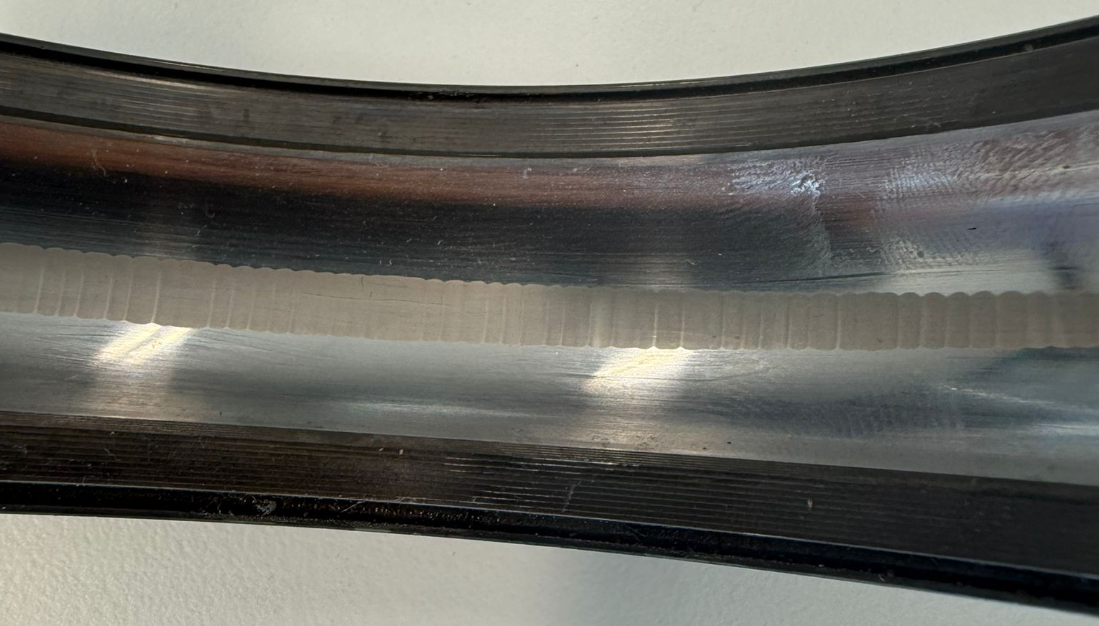
These systems can induce shaft voltages that lead to electrical discharge through the bearings, resulting in the characteristic fluting damage patterns.
This confirmed that the defect identified through vibration analysis was caused by electrical discharge within the bearing.
To prevent recurrence, a shaft grounding ring was installed on the motor. This corrective measure was implemented to divert stray electrical currents away from the bearing, reducing the risk of future electrical damage.
Step 6 | Effectiveness
Following the bearing replacement, vibration analysis confirmed a significant reduction in impact levels, with values returning to baseline conditions.
Spectral comparison before and after the intervention showed the disappearance of the harmonic family previously identified at 3.08x running speed, corresponding to the BPFO of the motor bearing. This confirmed the elimination of the defect-related vibration signature.
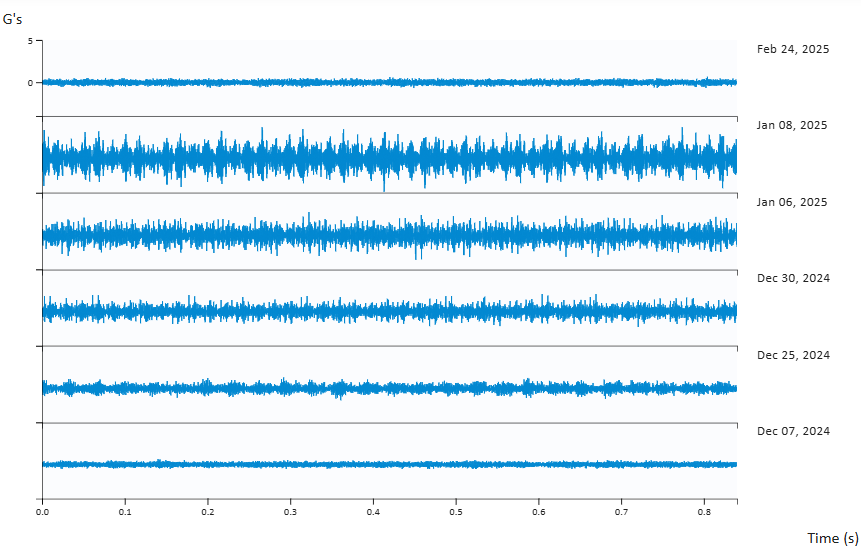
These observations validated both the initial diagnosis and the effectiveness of the corrective actions. No abnormal vibration patterns were detected after the intervention, confirming that the defect-related vibration signature had disappeared and that the asset had returned to normal vibration behavior.
Results
Managing a bearing defect on a VFD-driven compressor through early detection
The bearing defect was detected several weeks before any risk of failure, allowing the team to monitor its progression and manage the situation under controlled conditions.
Following the stabilization observed after lubrication, the compressor continued to operate without disruption until the scheduled shutdown, during which the motor bearings were replaced as planned. This approach avoided any unexpected motor failure on a critical refrigeration asset.
The inspection of the removed bearing confirmed electrical fluting as the root cause of the defect. This finding enabled the implementation of a corrective measure: the installation of a shaft grounding ring to reduce the risk of recurrence.
This case illustrates how continuous vibration monitoring using Wi-care wireless vibration sensors on VFD-driven equipment and analysis through I-see AI-enhanced PdM software allows not only early fault detection but also informed decision-making, enabling maintenance to be planned and executed under optimal conditions and highlighting the importance of predictive maintenance in the Food & Beverage industry.
Learn About Our
Technical Cases

Our Solutions Span All Assets,
Including Yours.
Are you ready to enhance your efficiency?
