

Machinery Overview
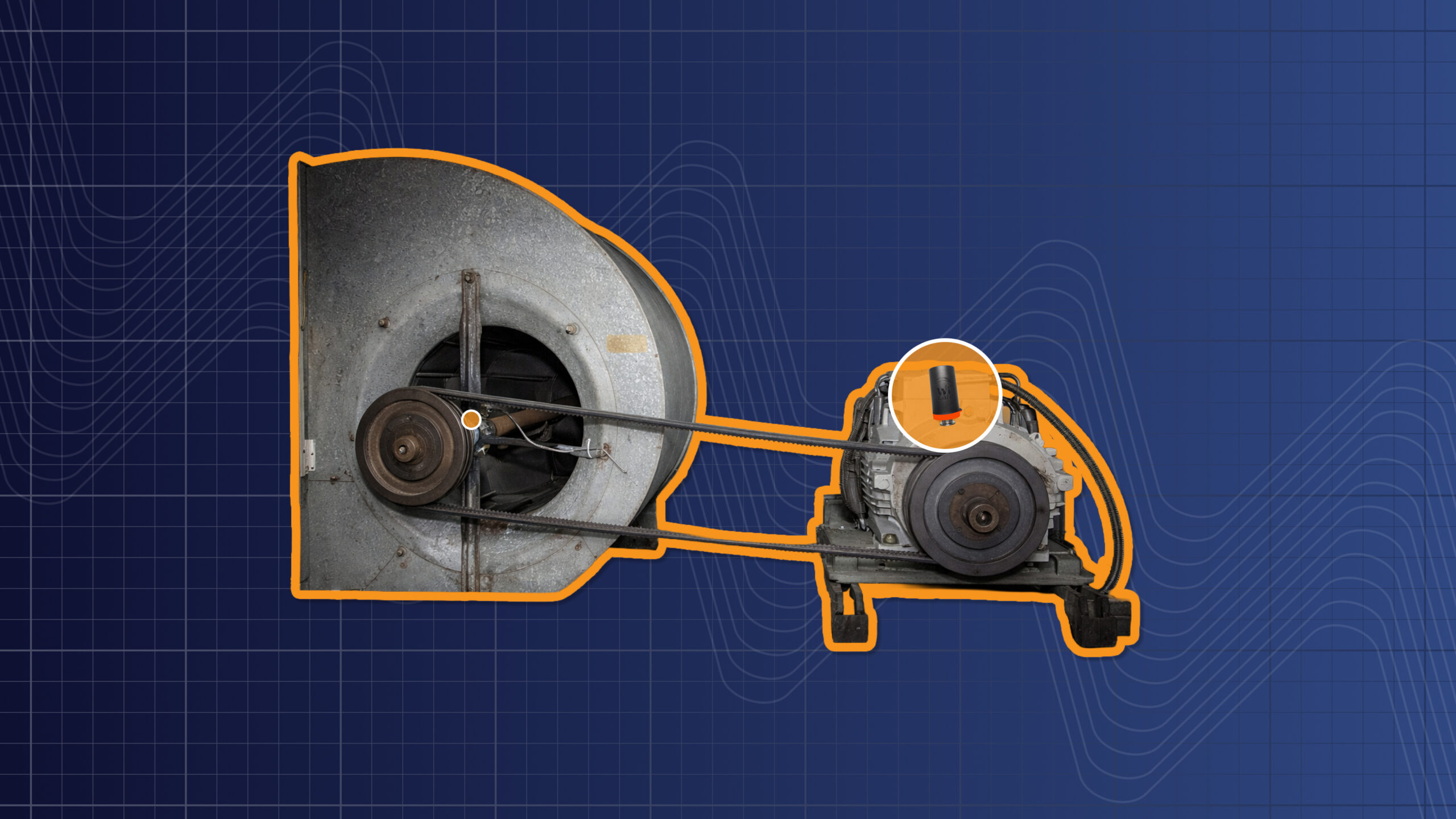
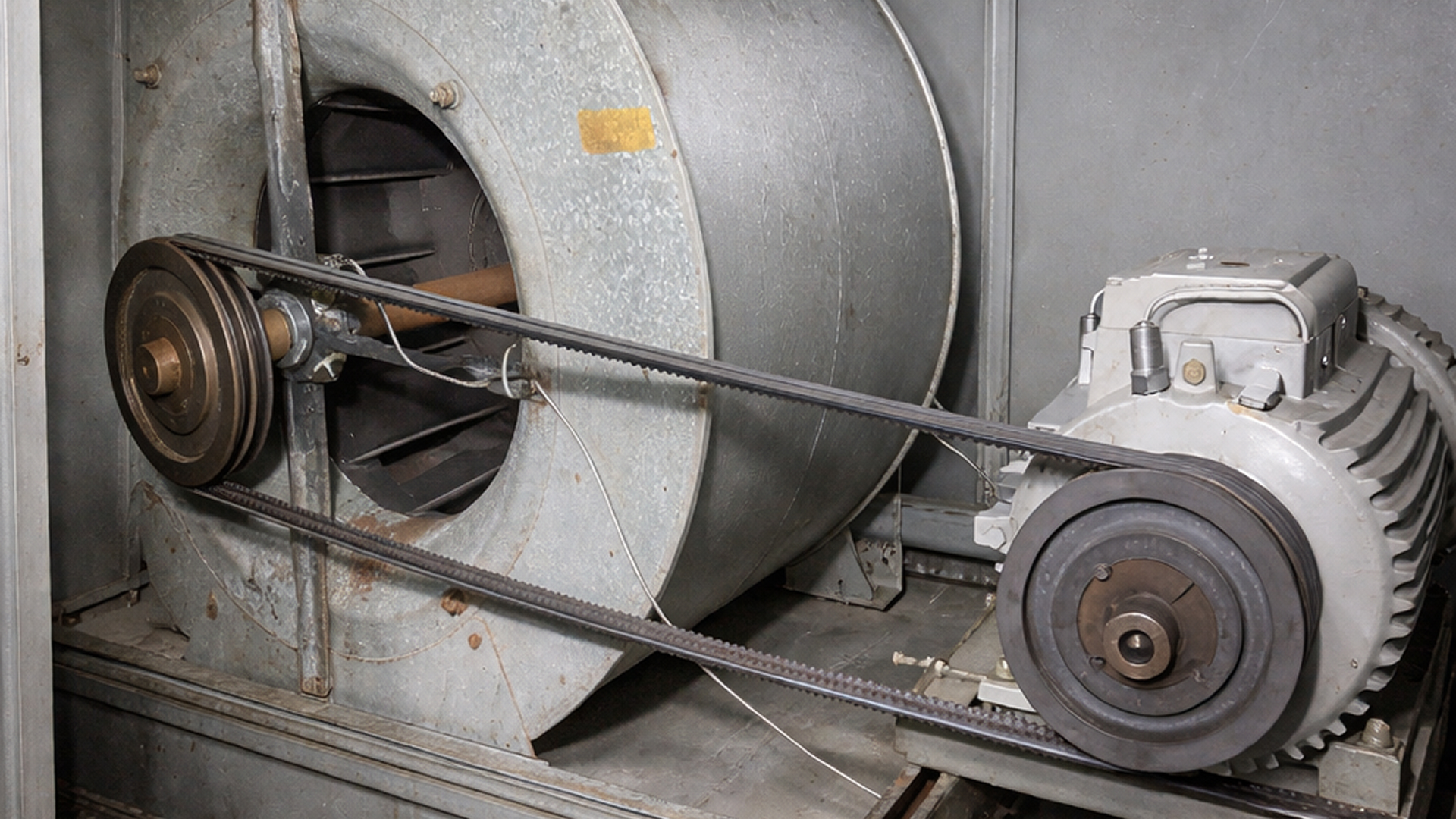
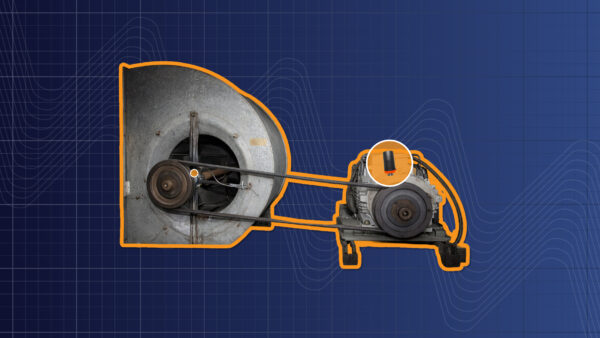
The monitored asset is a belt-driven centrifugal fan operating as part of a critical HVAC system in a pharmaceutical production plant.
This fan ensures controlled air circulation within the production area, maintaining cleanroom conditions and compliance with strict environmental and quality standards of the Pharma industry. Any unplanned stoppage would disrupt these conditions and may lead to production interruptions.
The system consists of an 11 kW, 4-pole electric motor running at 1500 RPM, driving the fan through a belt transmission. As a result, the fan operates at approximately 1630 RPM.
Due to its role in maintaining controlled production conditions, the fan must run continuously during operation. This makes early fault detection essential to avoid unplanned downtime and ensure maintenance can be planned without impacting production.
Monitoring Devices and Software Set-up
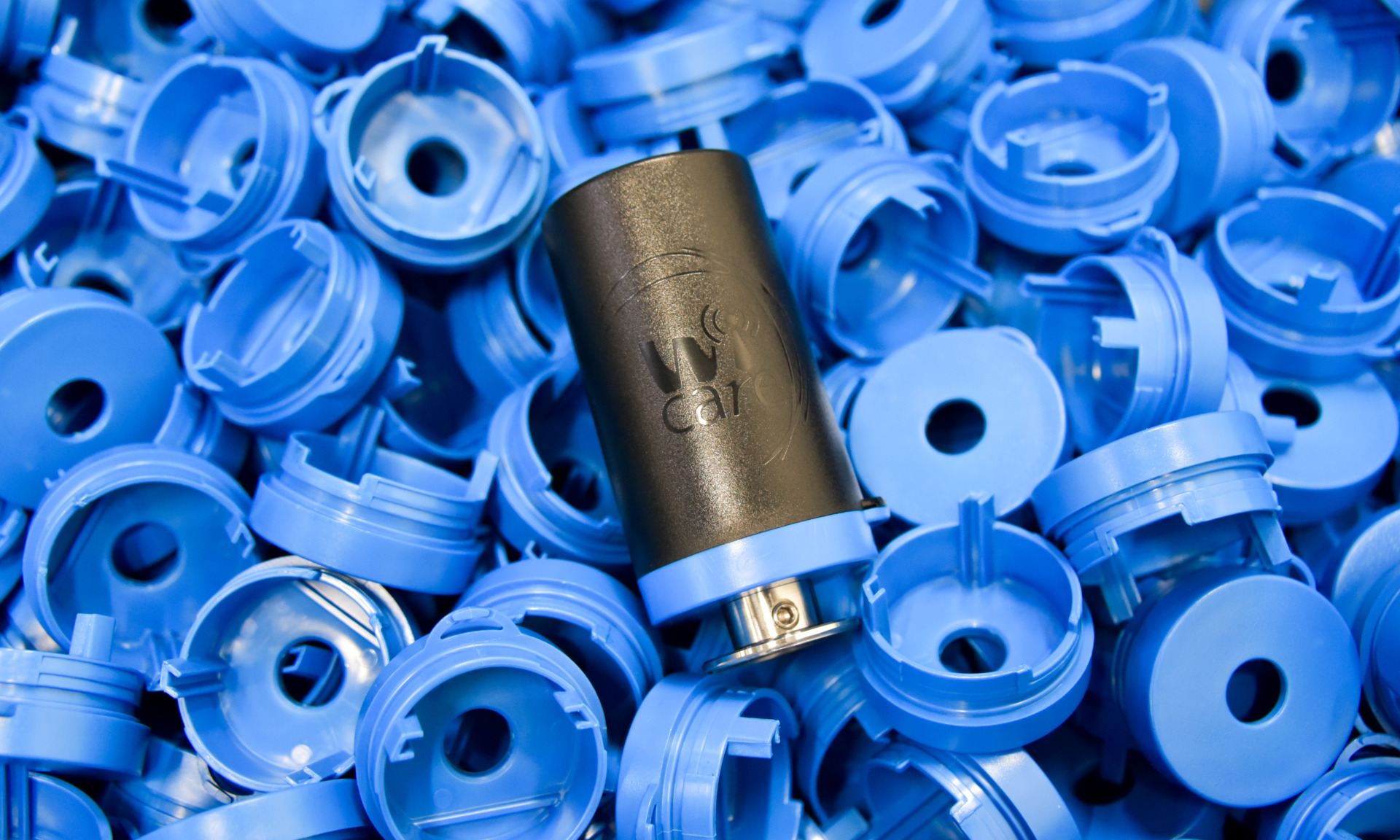
I-care reliability engineers installed Wi-care™ wireless vibration sensors on both the motor and the fan to enable continuous monitoring of the system’s mechanical condition.
The setup included two sensors on the motor and two on the fan, positioned to capture vibration behavior across the drivetrain and bearing locations.
The sensors transmitted data to I-see™, I-care’s PdM software. I-see™ automatically processes and categorizes incoming data to detect deviations from normal operating conditions and flag potential early signs of degradation.
These indicators are then analyzed by I-care specialists, who validate the findings, perform the diagnosis, and provide actionable recommendations.
The resulting insights are compiled into diagnostic reports to support maintenance decision-making.


Detailed Analysis
Step 1 | Issue detection
Several measurement points showed a gradual increase in overall vibration levels, as highlighted in the I-see™ dashboard.
![Vibration velocity trend showing rising RMS levels exceeding alarm thresholds on rotating equipment]](https://www.icareweb.com/wp-content/uploads/2026/04/vibration-velocity-rms-trend-alarm-threshold-exceedance-01-v1.png)
The highest amplitudes were recorded on the fan outboard side, reaching values of up to 32 mm/s RMS, indicating abnormal machine behavior.
This trend triggered a detailed analysis by an I-care vibration specialist to identify the source of the anomaly.
Step 2 | Initial Analysis and Hypothesis
The vibration spectrum measured on the fan revealed a dominant peak at the fan running speed (1x). While this component can be associated with several fault types, its prominence suggested unbalance as an initial hypothesis.
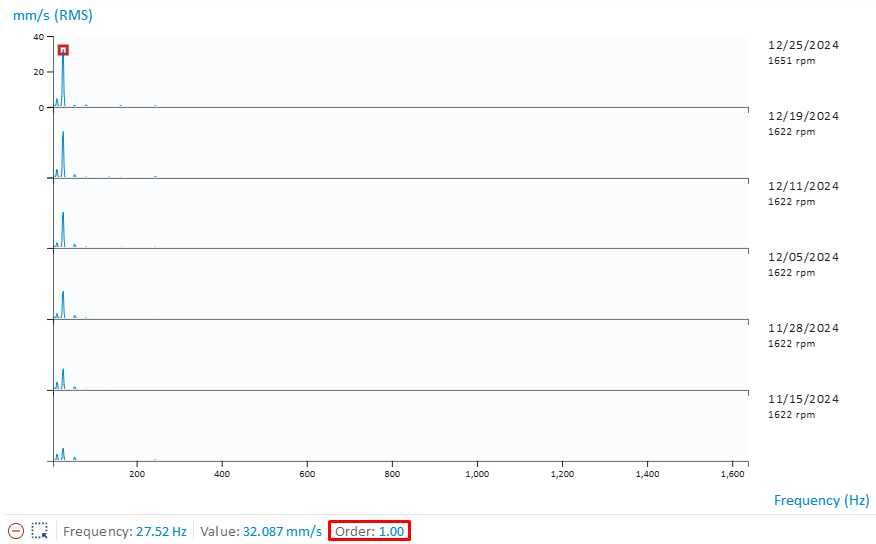
This component was particularly pronounced on the fan outboard measurement points, correlating with the locations where the highest overall vibration levels were recorded.
At this stage, the vibration signature was consistent with a typical unbalance condition, forming the initial hypothesis for the observed behavior.
Step 3 | Refined Diagnosis
Further analysis of the vibration signals revealed distinct impacting patterns in the time waveform, particularly on measurement points where the 1X component was less dominant.
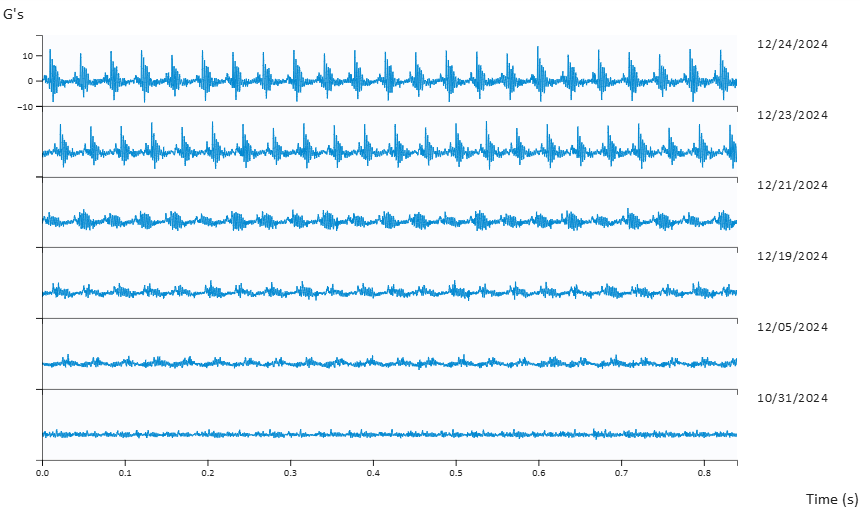
These impact signatures could not be explained by unbalance alone and indicated the presence of an additional mechanical issue.
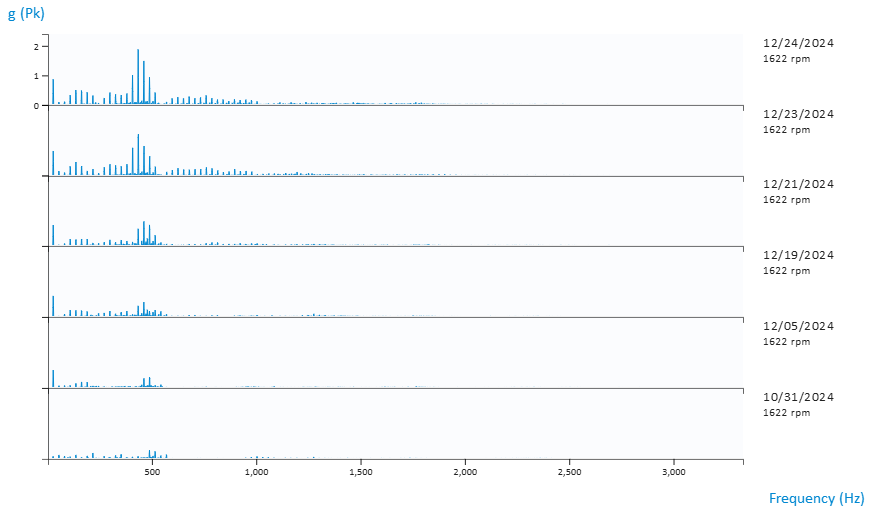
In parallel, the spectrum showed increasing harmonic content around the running speed, consistent with a degradation mechanism involving mechanical looseness.
The combination of impacting behavior and harmonic amplification led the analyst to refine the diagnosis toward a looseness issue, potentially linked to the forces generated by the initial unbalance.
Step 4 | Recommendation and Risk Management
Given the rapid increase in overall vibration levels and the evolution of the spectral and waveform patterns, I-care recommended inspecting the fan as soon as possible with high priority.
At that stage, the severity of the vibration behavior did not yet require an immediate shutdown, but the trend clearly indicated that the machine could no longer be left without close follow-up.
Because a scheduled production stop was already planned during Christmas time, the decision was made to keep the fan in operation under daily monitoring until that maintenance window, allowing the intervention to be performed without additional production downtime.
Step 5 | Monitoring and Fault Evolution
Following the recommendation, the fan remained under close daily monitoring to track the evolution of the defect and assess the risk of continued operation.
In the weeks that followed, the vibration behavior deteriorated rapidly. The increase in overall vibration levels, together with the evolution of the spectral and waveform patterns, confirmed that the defect was progressing quickly.
The first detection and report were issued on November 29. The situation escalated to an urgent level by December 21. Based on the observed degradation rate, the time between the first urgent indication and a potential failure was estimated at approximately 15 days.
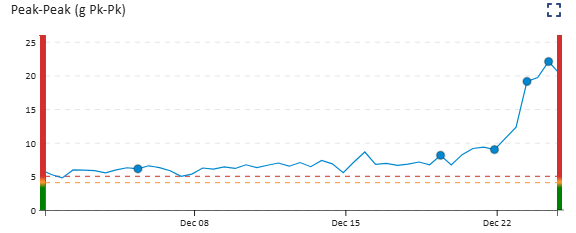
This close follow-up was essential in allowing the site to continue operating the fan until the scheduled Christmas shutdown while closely monitoring its evolution.
Step 6 | Inspection and Corrective Action
The inspection confirmed the presence of looseness between the bearing inner race and the shaft, validating the diagnosis based on the vibration analysis.
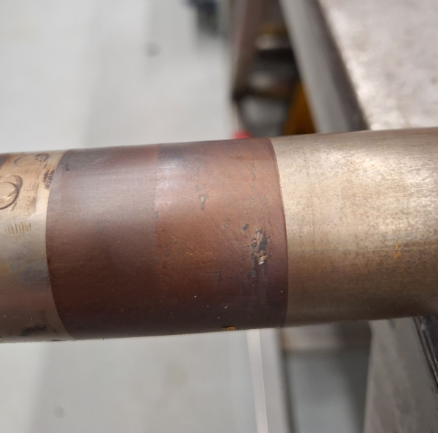
To eliminate the defect, the maintenance team replaced both the shaft and the associated bearings.
The intervention was carried out during the scheduled shutdown, allowing the issue to be resolved without impacting production.
Step 7 | Post-intervention Verification
Following the intervention, vibration measurements returned to baseline levels, confirming the disappearance of the previously observed anomaly.
The comparison between pre- and post-intervention data showed a clear reduction in overall vibration and the absence of impacting behavior, validating the effectiveness of the corrective action.
Continued monitoring in the months following the repair confirmed stable operating conditions, with no recurrence of abnormal vibration patterns.
Results
Avoiding a Critical HVAC Failure with Potential Production Losses Estimated in the Hundreds of Thousands per Day
Beyond the mechanical damage, an unexpected failure would have caused an unplanned stoppage of the HVAC system, compromising controlled air conditions in the pharmaceutical production area and likely rejection of a production batch.
With an estimated impact of hundreds of thousands of dollars, the risk associated with an unexpected failure was more than significant.
Instead, continuous monitoring with Wi-care™ and I-see™ enabled I-care experts to track the defect progression on a daily basis and accurately assess its severity. This made it possible to safely maintain operation until the scheduled Christmas shutdown, where the repair was carried out under controlled conditions.
This case clearly illustrates the value of continuous monitoring in fast-developing fault scenarios. While periodic inspections, depending on their frequency, may have missed this narrow failure window, continuous data combined with expert analysis allowed the issue to be detected early, followed closely, and resolved without disruption to production.
Learn About Our
Technical Cases
Our Solutions Span All Assets,
Including Yours.
Are you ready to enhance your efficiency?
